
Ant Group is one of the most influential fintech companies in the world. Best known for its mobile payments platform Alipay, Ant Group has expanded far beyond payment processing. Today, it operates a vast digital finance ecosystem that reaches deeply into the Chinese consumer economy.
Ant Group combines payments, lending, wealth management, insurance, digital identity, and merchant services within a single platform. This integrated approach defines what is now widely described as the super app economy. Rather than offering isolated financial products, Ant Group embeds finance directly into daily digital activity.
This review examines Ant Group’s evolution, business model, technology infrastructure, regulatory challenges, and global ambitions. It also assesses how Ant Group has reshaped digital finance, both inside China and internationally.
Origins: The Creation of Alipay
Ant Group originated inside Alibaba as a payments solution for e-commerce. In 2004, Alibaba needed a secure way to enable transactions on Taobao. Chinese banks lacked escrow and real-time digital payment capabilities at scale. Alipay was created to bridge that gap.
Alipay held buyer funds until goods were received, building trust between buyers and sellers. Adoption accelerated rapidly. By 2013, Alipay had surpassed PayPal in transaction volume. In 2014, Ant Financial was spun out from Alibaba. In 2020, the group rebranded as Ant Group, signalling a broader digital finance mission.
Alipay and the Super App Model
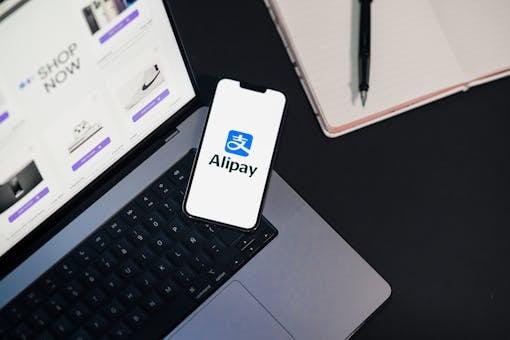
Alipay is not simply a payment app. It is a multifunctional super app that integrates financial and lifestyle services into a single interface. For over one billion users, Alipay acts as a daily operating system for money and commerce.
Alipay combines features typically spread across multiple Western apps. These include payments, personal finance, transport, food delivery, healthcare access, insurance, and credit services.
Core service categories include:
- Payments, QR-code transactions, online checkout, bill payments, and peer-to-peer transfers
- Wealth management, including money market funds such as Yu’e Bao
- Lending, consumer credit via Huabei and cash loans via Jiebei
- Insurance, on-demand micro-policies from third-party insurers
- Lifestyle services, transport booking, food ordering, and local services
This embedded finance model delivers services at the moment of need. Alipay’s interface adapts dynamically to user behaviour, location, and spending patterns, increasing engagement and cross-sell efficiency.
Scale and Market Reach
Ant Group operates at exceptional scale. As of 2024, it serves more than 1.3 billion users worldwide. Over one billion users are based in China, with hundreds of millions more accessing Ant-powered wallets across Asia.
Alipay processes trillions of renminbi in annual transaction value. Ant Group also supports more than 80 million small and micro-merchants. These businesses rely on Ant for payments, working capital, inventory tools, and digital marketing.
Flagship products have reached historic scale:
- Yu’e Bao, once the world’s largest money market fund
- Huabei and Jiebei, among China’s most widely used consumer credit tools
- Zhima Credit, a behavioural credit scoring system embedded across the ecosystem
Ant Group’s infrastructure is deeply integrated into China’s digital economy rather than operating at its edges.
Business Model and Revenue Structure

Ant Group generates revenue through four primary segments.
Digital Payments and Merchant Services
Transaction fees are regulated and thin, but merchant services generate higher margins. These include analytics, marketing tools, and operational software.
CreditTech
Ant facilitates lending through partner banks and earns fees while holding limited credit risk. This model once accounted for a significant share of group revenue.
InvestmentTech
Ant distributes wealth management products through Alipay, earning platform and distribution fees.
Insurtech
Insurance products are offered in partnership with licensed providers. Ant earns commissions and service fees.
The common driver across all segments is data. User behaviour informs risk assessment, product targeting, and pricing. Revenue is generated through engagement depth rather than high per-transaction fees.
Technology and Infrastructure
Ant Group operates a highly advanced financial technology stack. Core capabilities include real-time payments, AI-driven fraud detection, digital identity, and algorithmic credit assessment.
Beyond consumer services, Ant provides enterprise-grade infrastructure:
- AntChain, a blockchain platform for supply chains and trade finance
- OceanBase, a distributed database used by banks and insurers
- Zoloz, a biometric identity and compliance solution
This positions Ant Group as both a consumer platform and a financial infrastructure provider. In this role, it increasingly competes with global fintech infrastructure firms rather than consumer apps alone.
The Cancelled IPO and Regulatory Shift

In 2020, Ant Group planned a record-breaking IPO in Shanghai and Hong Kong. Days before listing, regulators suspended the offering. Authorities raised concerns about systemic risk, capital adequacy, and regulatory arbitrage.
Subsequent reforms reshaped the group:
- Lending units were brought under banking-style capital rules
- A financial holding company structure was imposed
- Yu’e Bao was capped to reduce liquidity risk
- Data governance rules around credit scoring were tightened
This intervention marked a turning point for China’s platform economy and forced Ant Group to realign its strategy.
Strategic Pivot After Regulation
Following regulatory action, Ant Group shifted away from balance-sheet risk. The group now focuses on providing technology to banks, insurers, and public institutions.
Key priorities include blockchain services, enterprise databases, digital identity, and compliance tools. Consumer credit continues, but under tighter oversight and in partnership with licensed financial institutions.
This transition allows Ant Group to maintain scale while reducing regulatory friction.
International Expansion Strategy

Ant Group’s global approach relies on partnerships rather than direct market entry. It supports local wallets across Asia, enabling cross-border payments for travellers and merchants.
Partner wallets include platforms in Southeast Asia and East Asia. Ant supplies technology, security, and interoperability, earning licensing and service fees.
Expansion beyond Asia remains cautious due to geopolitical and regulatory sensitivity, particularly in Western markets.
Competitive Positioning
In China, Ant Group’s primary competitor is WeChat Pay. Together, they dominate mobile payments. WeChat focuses on social engagement, while Alipay emphasises commerce and finance.
Additional competition comes from e-commerce platforms, short-video ecosystems, and bank-led wallets encouraged by regulators.
Globally, Ant competes indirectly with firms such as PayPal, Stripe, and large regional super apps, although few match its breadth.
Risks and Criticism

Ant Group faces ongoing scrutiny. Key concerns include data privacy, household debt levels, market concentration, and geopolitical exposure.
The company has responded by strengthening governance, reducing exclusivity, and aligning publicly with regulatory priorities. Oversight remains intense, but reforms have stabilised its operating environment.
Outlook
Ant Group remains central to the future of fintech. Its embedded finance model continues to influence global platform strategy.
Future priorities include enterprise services, blockchain adoption, AI-driven risk tools, and support for central bank digital currency initiatives. Financial inclusion through partnerships also remains a stated goal.
Conclusion
Ant Group’s evolution from a payments tool to a cornerstone of the super app economy reflects both innovation and adaptation. The company demonstrated the power of ecosystem-based finance at scale, then adjusted rapidly when regulation caught up.
For global fintech leaders, Ant Group offers a clear lesson. Platform finance can unlock enormous value, but only when balanced carefully against systemic risk, data responsibility, and regulatory alignment.