
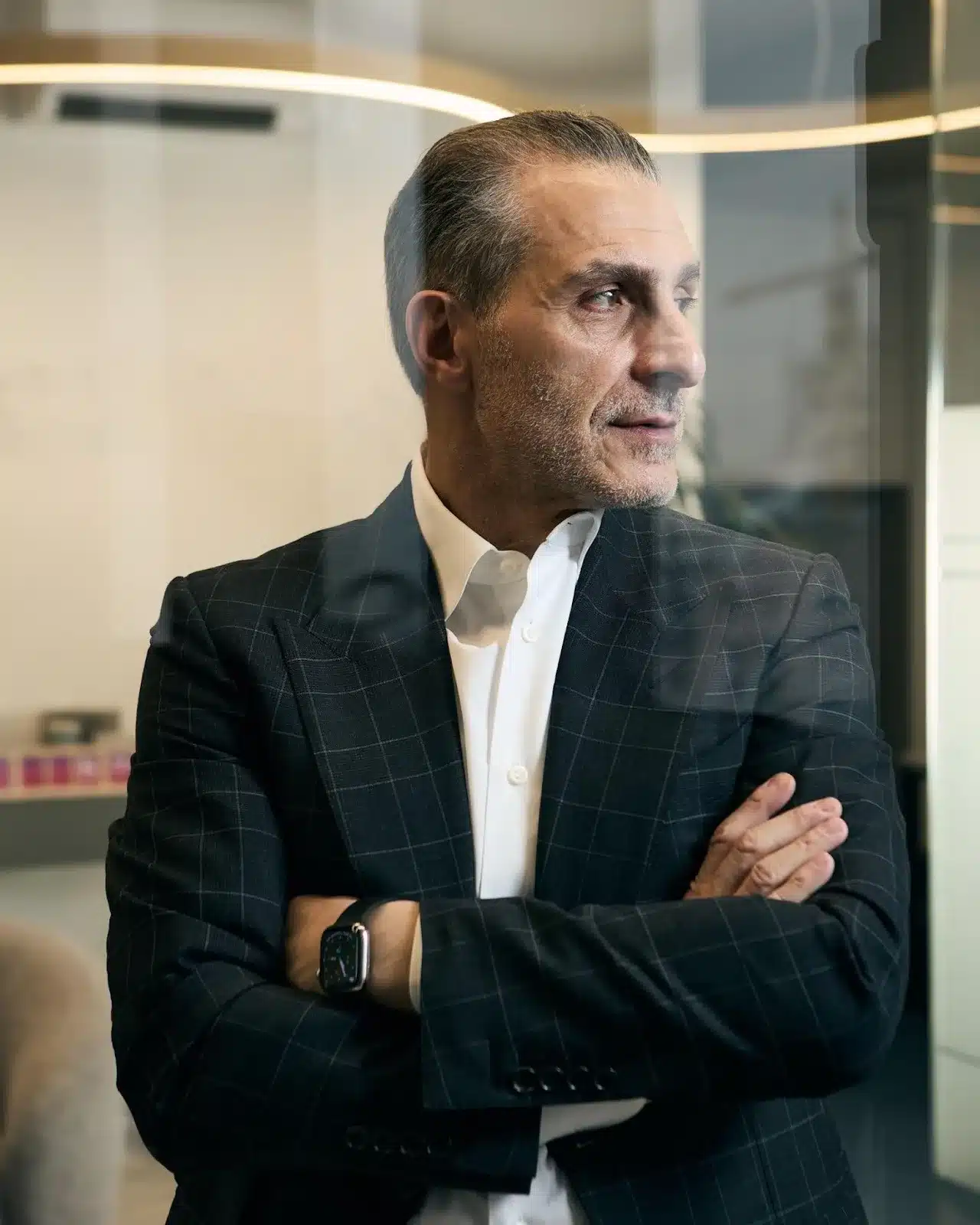
The pace of change in financial services continues to accelerate, driven by new technology, shifting customer expectations and the pressure on traditional institutions to reinvent themselves. Across banking and fintech, long-held assumptions are being challenged, new models are emerging, and the line between innovation and infrastructure is becoming thinner by the day. In this interview with Vazgen Gevorkyan for Fintech Review, we explore the ideas shaping the next decade of financial services, from the role of technology in rebuilding trust to the opportunities that established players still overlook.
What is one thing you would change in the banking and/or fintech sector?
If I could change one thing in the banking and fintech world, I would invite banks to reconsider their attitude toward fintechs. There are so many opportunities to combine fintech and the banking verticals.
Banking, at the core of it, is a utility. By blending technology deeply within the gamut of banking, we can formulate client-first financial services which are advanced, seamless and efficient.
What is the hardest problem in fintech/banking that nobody is talking about?

We need to remember that banks play crucial roles in the real economy.
Banks are largely believed to be traditional safe havens for depositors and are a significant source of credit for a broad range of borrowers. Banks can also create significant liquidity.
A challenge I would like to see discussed more is the importance of traditional banks reconciling with a digital first reality and embracing fintech, for the sake of their survival and the real economy.
Where do you think most firms are “getting it wrong” in digital transformation?
We need to all always remember that all change should be structural, not lip service. When it comes to digital transformation, I would caution against often running brief initiatives that lack the structure necessary to sustain real transformation. True transformation requires a mix of strategy, culture, technology, and execution.
Strategy is important because strategies articulate an organization’s long-term vision.
All leaders should aspire to create a culture of ownership and collective vision in order to incentivise change.
The choice of technology is crucial and needs to be fit-for-purpose.
Finally, how that transformation is executed is obviously important. However, leaders should try to move beyond the obvious measures of success, avoiding a box ticking exercise, and instead focus on the breadth of the positive impact the transformation has created.
What is changing about customer expectations that banks and fintechs are too slow to react to?

What’s really and constantly changing is customer behavior. People now expect speed, advancement and visibility at every step. Although this shift is positive and only beneficial for everyone, it puts the client back where they’ve always belonged: first. Behind every account is a person with a vision, objective or goal – buying a home, building a business, securing their future.
The firms that remember their client’s thoughts, and create around people, will be the ones that stay relevant in the long term. When clients are financially informed, they not only engage more deeply, they make better decisions. Education, then, becomes a shared responsibility and a long-term investment in future trust.
Where do you see the biggest trust gaps between financial services and their customers?
The biggest trust gaps in financial services stem from discrepancies in what firms say and what customers experience. Trust is developed with consistency. It means transparent actions that align exactly with words – both internally and externally.
Customers can predict intent quickly; they understand when they’re being treated as data instead of people.
But trust also relies on comprehension. When clients don’t understand how products work, or why decisions are made, suspicion grows. That’s why transparency must go hand in hand with education.
What would “radical transparency” look like in financial services – and why does it matter?

“Radical transparency” in financial services is often presented as the ideal. It’s framed as an ecosystem where every transaction, asset, and transfer is visible, verifiable, and instant, powered by real-time blockchain infrastructure. The technology for this is largely in place.
However, when discussing full transparency, we also need to be cognizant of the privacy that underpins financial trust. There are always ethical and practical considerations when implementing new technology. To me the ideal is to make responsible transparency accessible to everyone, without dismantling the confidentiality that secure banking requires.
Do you see regulation as a barrier or a driver of innovation right now?
The contrast is that regulation is absolutely essential. In a dynamic and moving society, we need rule of law, checks and balances, and safeguards to protect consumers and ensure stability. Regulation plays a vital role in keeping the financial system healthy.
The banking industry recognizes and sympathizes with the challenge regulators face in maintaining traditional safeguards while adapting to the accelerating demands of technological progress.
What’s your message for the larger players in the Financial Services marketplace? (e.g. If you had the ear of the CEO/CIO of a major bank, what would you say?)

Be flexible, take attention to service, communication and AI opportunities
Focus on the client – not just by serving, but by teaching. The more your clients understand the system, the better outcomes they create.
If you care about that, the rest will flow: flexibility, service, communication, and trust.
What is a common piece of advice in fintech/banking that you completely disagree with?
Labelling any IT as “Fintech.” It’s not. Fintech means technology that delivers financial services effortlessly – faster, simpler and cohesively. Most core systems in banks haven’t changed in decades.
The upgrades that have happened usually come from outside forces (smartphones, blockchain, etc). There is room for banks to be more strategic in their adoption of technology.
Where do you think leaders in financial services need to be braver?
The future leaders in financial services will be bold in vision of where the space needs to get, yet also humble in the duty that they have to their client base. They will seek to have direction and ongoing communications with regulators, authorities and other stakeholders.
They will engage collaboratively, with the optimal goal of making things better for their clients. Leaders understand that they need to be accountable, learn from mistakes, and calibrate so as to allow them to really take their organizations – as well as customers – to the next level.
Beyond AI, which technologies do you think will actually change banking in the next decade?

AI may be the enabler, but data will be the real game-changer. The banks that master intelligent data analytics will define the future of financial services.
In the next decade, I foresee that banking will move from servicing transactions to predicting needs. AI is only as powerful as the data behind it. The real transformation will come from the ability to collect, analyse, and translate vast amounts of data into personalised, actionableinsights. Delivered in real time.
Imagine a banking ecosystem where your financial institution understands your habits, anticipates your decisions, and tailors products around your life. Seamlessly, securely, and responsibly.
But there’s a deeper shift happening. Banking will become proactive, not reactive. Instead of customers coming to banks, banks will come to customers. They will predict needs before they arise, preventing risks before they occur, and empowering individuals and businesses with smarter, faster, and more relevant financial solutions.
The winners will be the institutions that treat data not as information, but as intelligence. Those who hesitate will find themselves excluded from the next decade’s financial ecosystem, because customers will no longer accept generic services.
About

Vazgen Gevorkyan is a global entrepreneur recognized for transforming digital banking through mobile-first solutions and strategic global partnerships.
With a career spanning banking, hospitality, infrastructure, and sustainability, he operates in Armenia and the U.S., mentoring entrepreneurs and leading initiatives that integrate economic development with meaningful social impact.