
Money is one of the most fundamental inventions of human society. It allows people to exchange goods and services, store value, and measure economic activity. But what exactly makes money, money? For centuries, societies relied on commodities such as gold and silver. Today, most of the world uses what is called fiat money. Unlike commodity money, fiat money has no intrinsic value. Its worth comes from government decree and collective trust. With the rise of cryptocurrencies and alternative forms of payments, questions arise.
The question many people ask themselves is if fiat money truly qualifies as money. By looking at its origins, how it works, and its strengths and weaknesses, we can better understand why the global economy still relies on it and why alternatives like cryptocurrencies challenge its dominance.
What Is Fiat Money?
Fiat money is currency issued by a government that is not backed by a physical commodity. Instead, its value is based on the confidence people place in the issuing authority. The word “fiat” comes from the Latin phrase meaning “let it be done.”
In this context, it means money has value because governments declare it so.
Examples include the U.S. dollar, the euro, the British pound, and the Japanese yen. None of these are redeemable for gold or silver. Instead, they function because people believe others will accept them in exchange for goods and services.
Fiat money is created either in physical form, such as banknotes and coins, or digitally through the banking system. Central banks control its supply, adjusting interest rates and monetary policies to stabilize economies.
The Historical Shift from Commodity to Fiat

For much of history, money was tied to tangible assets. Gold and silver coins dominated international trade for centuries. Later, paper money emerged as a convenient substitute but was typically backed by precious metals.
The shift began in the 20th century. During the Great Depression, many countries abandoned the gold standard temporarily to regain economic flexibility. After World War II, the Bretton Woods system pegged currencies to the U.S. dollar, which itself was convertible into gold.
In 1971, President Richard Nixon ended dollar convertibility to gold, effectively bringing the world into the era of pure fiat money. Since then, currencies have floated freely in global markets, with value determined by supply, demand, and government credibility.
This shift gave governments greater control over economic policy but also removed the hard limits once imposed by scarce commodities.
The Functions of Money
To evaluate whether fiat money is “real money,” it is useful to revisit the classic functions economists assign to money:
- Medium of exchange: Money must facilitate transactions. Fiat money clearly serves this role, as it is universally accepted within its issuing jurisdiction.
- Unit of account: Prices and debts are measured in terms of money. Fiat currencies dominate accounting, contracts, and financial reporting worldwide.
- Store of value: Money should preserve purchasing power over time. Here fiat is more complex. While generally stable in developed countries, inflation can erode value.
- Standard of deferred payment: Money allows future obligations such as loans or salaries to be agreed upon. Fiat money excels here, as financial systems are built around it.
By these criteria, fiat money meets the definition of money. Its weaknesses are most visible in the store of value function, especially in times of high inflation or currency crises.
Why Fiat Money Works

The most important factor behind fiat money’s success is trust. People accept dollars, euros, or yen not because they are backed by gold but because they believe others will accept them too. Trust is reinforced by law, as governments require taxes to be paid in national currency, creating constant demand.
Another reason is flexibility. Because fiat money is not tied to commodities, central banks can expand or contract the money supply to stabilize economies. During financial crises, this ability allows governments to inject liquidity, prevent bank runs, and stimulate demand.
Fiat money also supports modern economies by enabling credit systems. Banks can create deposits through lending, multiplying the supply of money and fueling economic growth. Without fiat, managing such complex financial systems would be far harder.
Weaknesses and Risks of Fiat
Despite its dominance, fiat money has limitations.
- Inflation: When too much money is created, prices rise. Moderate inflation is manageable, but hyperinflation can destroy currencies, as seen in Zimbabwe and Venezuela.
- Dependence on governments: The value of fiat depends on responsible monetary policy. Political mismanagement can erode trust quickly.
- No intrinsic value: Unlike gold, fiat has no independent worth. If trust fails, the currency collapses.
- Global imbalances: Reserve currencies like the U.S. dollar create dependency, giving issuing countries disproportionate power over the world economy.
These weaknesses explain why alternatives like gold and cryptocurrencies appeal to some people as hedges against fiat instability.
Fiat Money and Inflation

Inflation is often the biggest criticism of fiat money. Critics argue that because central banks can create unlimited currency, they risk devaluing money over time.
However, moderate inflation is often seen as beneficial. It encourages spending and investment rather than hoarding. Deflation, in contrast, can stall economies. Central banks aim to maintain inflation around 2 percent annually, balancing growth with stability.
The danger arises when governments abuse fiat powers. History shows that hyperinflation often follows political crises, war, or irresponsible fiscal policies. In such cases, people abandon fiat currencies and seek alternatives like foreign currency or barter.
The Role of Central Banks
Fiat money is inseparable from central banks. These institutions issue currency, regulate banks, and conduct monetary policy. In the U.S., the Federal Reserve manages the dollar. In Europe, the European Central Bank oversees the euro.
Central banks influence interest rates, credit availability, and inflation expectations. They are tasked with ensuring stability, but their decisions are not without controversy. Some critics argue they distort markets, while supporters emphasize their role in preventing economic collapse.
The 2008 financial crisis and the COVID-19 pandemic illustrated the importance of central banks. Massive injections of liquidity kept financial systems from seizing up. These interventions reinforced fiat’s role as the foundation of modern economies.
Fiat Money vs. Alternatives
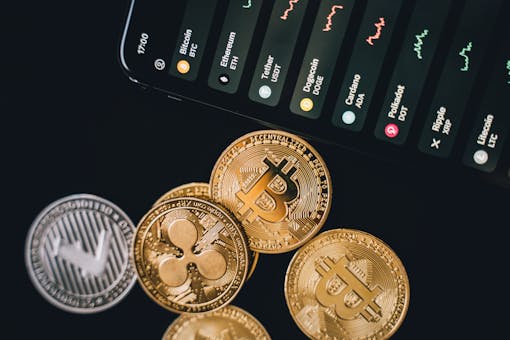
Fiat money is not the only form of money in existence. Comparing it with alternatives helps highlight its strengths and weaknesses.
- Gold and commodities: Provide intrinsic value but lack flexibility. Supply cannot expand easily, making them poor tools for modern economies.
- Cryptocurrencies: Offer decentralized, borderless transactions. Bitcoin is often described as “digital gold,” with a fixed supply. However, volatility, scalability issues, and regulatory uncertainty limit adoption.
- Stablecoins: Digital tokens pegged to fiat currencies aim to combine crypto efficiency with fiat stability. Yet they depend on trust in issuers to maintain backing.
- Local currencies and barter: Niche systems can work within small communities but lack scalability.
So far, fiat remains the most practical system for large economies. Its combination of state backing, legal enforceability, and financial infrastructure gives it unmatched reach.
Fiat as Legal Tender
One reason fiat money works is that it is designated as legal tender. This means creditors must accept it for debts within the issuing country. By law, taxes, salaries, and contracts are settled in fiat.
Legal tender laws guarantee demand for fiat. Even if people distrust it, they still need it to pay obligations. This legal foundation distinguishes fiat from purely voluntary alternatives like cryptocurrencies.
Is Fiat Money Sustainable?

The question of whether fiat money is sustainable depends on political stability and economic management. In stable democracies with independent central banks, fiat has proven resilient for decades. The U.S. dollar remains the global reserve currency, trusted worldwide.
However, fiat systems are vulnerable where governance is weak. Currency crises often coincide with broader political instability. Without institutional credibility, fiat collapses.
Globally, the dominance of fiat has endured despite challenges from gold, crypto, and alternative systems. The reason is simple: fiat works at scale. Until alternatives prove equally reliable, fiat will remain the standard.
The Psychological Dimension
Money is as much about psychology as economics. People believe fiat money has value because others do. This network effect is powerful. Once widely accepted, currencies gain inertia that is hard to break.
Critics argue this reliance on belief is fragile. Yet history shows fiat can persist for generations when supported by stable institutions. In many ways, all money, including gold and crypto, depends on collective trust. Fiat simply makes this dependence explicit.
Fiat and the Digital Future

One of the most significant developments in recent years is the rise of central bank digital currencies (CBDCs). These are digital forms of fiat issued directly by central banks. Unlike cryptocurrencies, they remain centralized and tied to state authority.
China has already launched pilots of the digital yuan. The U.S. and Europe are exploring digital dollars and euros. If adopted widely, CBDCs could make fiat even more dominant by modernizing payments and reducing reliance on private banks.
At the same time, digital innovation may also expose fiat to new competition. Decentralized finance and stablecoins aim to bypass traditional systems. The future may see coexistence rather than replacement.
Conclusion: Fiat Money Is Still Money
So, is fiat money really money? The answer is yes. It fulfills the core functions of money as a medium of exchange, a unit of account, a store of value (with caveats), and a standard for deferred payments. Its power lies in trust, law, and the ability of governments to maintain stability.
Fiat money is not perfect. It is vulnerable to inflation, political misuse, and crises of confidence. But despite these flaws, it remains the backbone of modern economies. The scale and complexity of global trade, finance, and credit systems make fiat indispensable.
Alternatives like cryptocurrencies and gold may serve as hedges, but they have not replaced fiat. Instead, they highlight fiat’s limitations while reinforcing its continued relevance.
The future of money may involve digital upgrades and greater competition, but for now, fiat remains firmly in place. It may not be tangible like gold, but it is money.