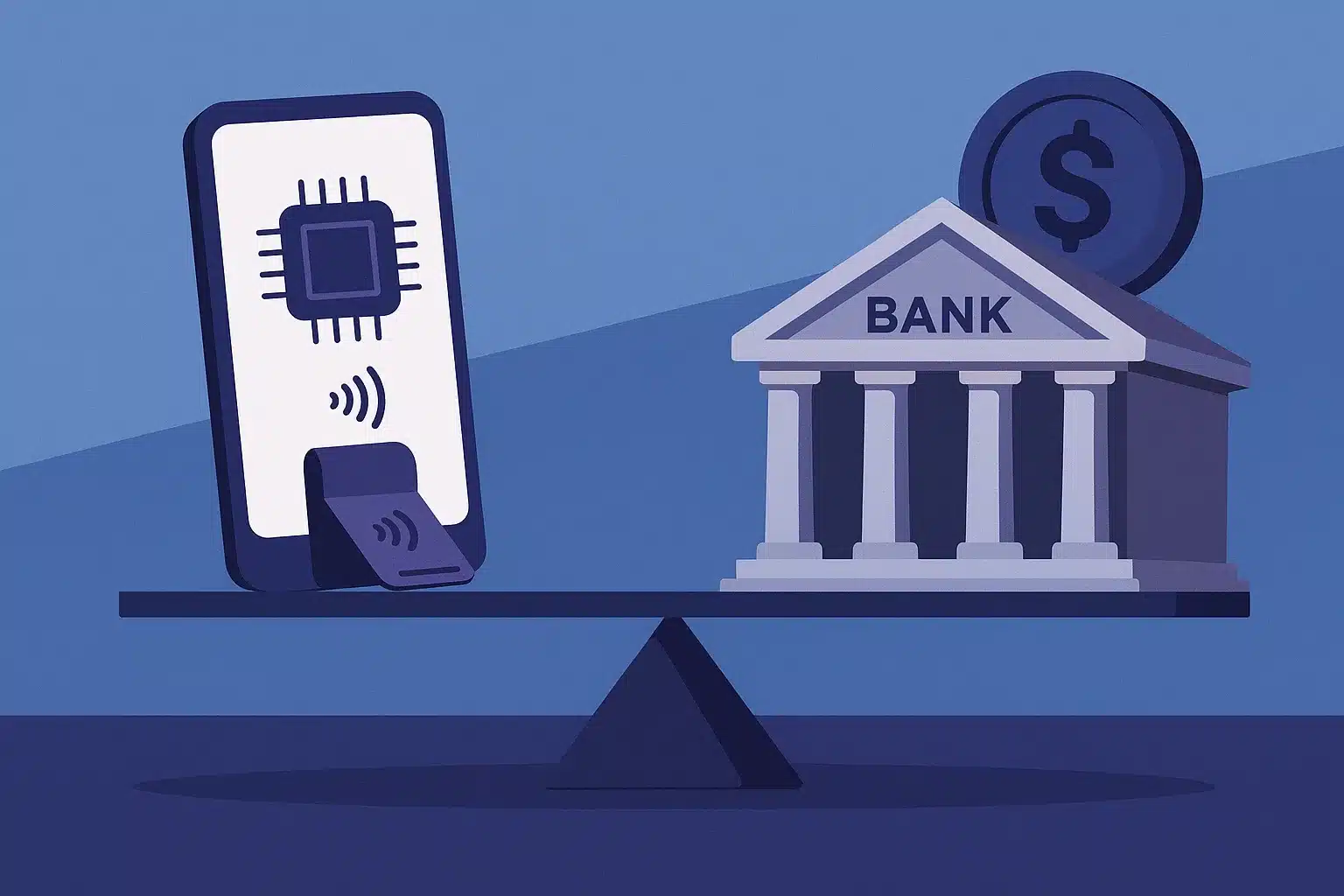
For more than a decade, commentators have speculated that fintechs would kill banks. Startups promised to revolutionize financial services, strip away inefficiencies, and replace outdated incumbents with agile, customer-centric platforms. Pitches to investors often framed traditional banks as dinosaurs ripe for disruption. The media echoed this narrative with headlines forecasting the end of banking as we know it.
Yet more than ten years into the fintech revolution, banks are still very much alive. Some have even thrived by adopting digital strategies, partnering with fintechs, and reimagining how they serve customers. While fintechs have undeniably changed the landscape, the prediction that they would kill banks has proven misleading. The reality is far more complex: fintechs have reshaped, pressured, and modernized banks, but they have not replaced them.
This article examines why fintechs did not kill banks, the areas where they have had the greatest impact, and how the future will likely be defined not by replacement but by coexistence and collaboration.
The Origins of the “Fintech vs. Banks” Narrative
The fintech wave accelerated after the 2008 financial crisis. Banks had lost public trust and faced stricter regulations. At the same time, smartphones, cloud computing, and APIs opened the door for new entrants. Fintech startups saw an opportunity to serve frustrated customers with sleek apps, lower fees, and faster services.
The narrative of disruption was fueled by comparisons with other industries. Just as Netflix disrupted Blockbuster and Uber disrupted taxis, many argued that fintechs would disrupt banks. Venture capital flowed into startups aiming to “unbundle the bank” — offering specialized services like payments, lending, or wealth management in a digital-first way.
This framing set up a binary: nimble fintechs on one side, slow incumbents on the other. But banking is not the same as video rentals or taxis. The industry has unique characteristics that make full disruption much harder.
Why Banks Did Not Disappear

Several factors explain why fintechs did not kill banks:
1. Regulation and Licensing
Banking is one of the most heavily regulated industries in the world. Obtaining a full banking license requires enormous capital, compliance infrastructure, and trust. Fintechs often operate under lighter licenses or partner with banks to deliver services. This dependence on banking infrastructure limits their ability to replace incumbents outright.
2. Balance Sheets and Trust
Banks hold deposits, provide mortgages, and manage corporate lending on a scale that fintechs cannot easily replicate. Customers trust banks with life savings because of deposit insurance and centuries of institutional credibility. Fintechs may offer attractive features, but building the same level of trust takes decades, not years.
3. Customer Inertia
Switching banks is not as simple as downloading a new app. Customers often have salaries, mortgages, and multiple accounts tied to one institution. While fintechs can attract users for specific services, convincing them to abandon a bank relationship entirely is far harder.
4. Collaboration Instead of Competition
Many fintechs discovered early on that partnering with banks was more sustainable than trying to replace them. Banks bring licenses, capital, and customer bases, while fintechs bring innovation and user experience. This collaboration model has become the norm.
Where Fintechs Have Changed Banking
Although they did not kill banks, fintechs have had transformative effects:
Payments
Apps like PayPal, Venmo, Cash App, and Stripe revolutionized digital payments. They set new standards for speed, convenience, and low costs. Banks were forced to improve their own offerings, invest in real-time payments, and enhance mobile banking experiences.
Lending
Fintech lenders such as LendingClub, SoFi, and Affirm showed how technology could streamline credit approvals and offer alternative models like buy now, pay later (BNPL). Banks adapted by digitizing loan processes and exploring partnerships with these platforms.
Wealth Management
Robo-advisors like Betterment and Wealthfront democratized investing with low-cost, automated portfolios. Traditional wealth managers have since adopted similar tools, often integrated into digital banking apps.
Neobanks
Digital-first challengers like Chime, Monzo, and N26 attracted millions of customers with zero-fee accounts, early access to paychecks, and modern apps. While they rarely fully replace traditional banks, they have influenced banks to improve mobile platforms, reduce fees, and modernize customer support.
The Bank-Fintech Symbiosis

Today, banks and fintechs are increasingly interdependent. Banks provide fintechs with the infrastructure to scale, while fintechs push banks to innovate. This symbiosis takes several forms:
- Banking-as-a-Service (BaaS): Fintechs rely on licensed banks behind the scenes for compliance and settlement.
- Partnerships: Banks integrate fintech products into their services. For example, Goldman Sachs partnered with Apple on the Apple Card.
- Acquisitions: Large banks acquire fintech startups to gain technology and talent. BBVA acquired Simple, while Visa bought Plaid.
- Co-branding: Banks and fintechs co-launch products targeting specific demographics.
This collaboration reflects the reality that banks bring stability and trust, while fintechs bring speed and user experience. Together, they create value neither could achieve alone.
| Feature | Fintechs | Banks | Partnership Model |
|---|---|---|---|
| Core Strength | Innovation, user experience, speed | Trust, capital, regulation | Combines innovation with scale and compliance |
| Weakness | Limited licenses, lack of scale | Legacy systems, slower innovation | Coordination complexity, profit-sharing |
| Customer Appeal | Low fees, sleek apps, niche solutions | Breadth of services, established trust | Best of both: innovation + reliability |
| Examples | Chime, Stripe, SoFi | JPMorgan Chase, HSBC, BBVA | Apple Card (Goldman Sachs), Plaid–Visa deals |
| Future Outlook | Specialized niches, embedded finance | Digital transformation, ecosystem roles | Dominant model, driving industry growth |
Why Banks Still Matter
The prediction that fintechs would kill banks overlooked what banks do best:
- Capital provision: Banks hold deposits, fund mortgages, and extend credit to businesses at massive scale.
- Regulatory compliance: Banks navigate complex legal frameworks, from anti-money laundering to data protection.
- Systemic role: Banks are integrated into monetary policy, payments infrastructure, and economic stability. Central banks and governments rely on them.
- Universal services: Many banks serve everyone, from individuals to multinationals, offering breadth that fintechs cannot match.
These structural advantages mean that while banks may evolve, they are not easily replaced.
Challenges for Fintechs
If fintechs are not killing banks, they are facing their own headwinds:
- Profitability pressure: Many fintechs rely on venture capital and struggle to achieve sustainable margins.
- Regulatory scrutiny: As they scale, fintechs attract more oversight, reducing their early agility.
- Commoditization: Features like instant transfers or mobile apps are now standard, making differentiation harder.
- Customer trust: High-profile failures or security breaches can damage confidence in new entrants.
The fintech dream of replacing banks often collided with these realities, pushing startups toward collaboration instead.
The Rise of Embedded Finance

One area where fintechs are shaping the future is embedded finance — the integration of financial services into non-financial platforms. Companies like Shopify, Uber, and Amazon now offer payments, lending, and insurance within their ecosystems, often powered by fintech infrastructure.
This trend blurs the line between banks and fintechs. Banks still provide underlying capital and compliance, but consumers increasingly interact with financial products through technology platforms. Rather than killing banks, fintechs are changing how banking is distributed.
The Future: Coexistence, Not Replacement
Looking forward, the relationship between fintechs and banks will likely deepen in several ways:
- Open banking: Regulations that require banks to share data with third parties via APIs will spur more collaboration.
- Digital transformation: Banks will continue to invest in technology, often integrating fintech tools directly.
- Specialization: Fintechs will focus on niches where they can differentiate, while banks maintain broad services.
- Global inclusion: Fintechs will expand financial access in emerging markets, often partnering with banks to scale responsibly.
Rather than banks disappearing, the landscape will feature ecosystems where fintechs and banks work side by side.
Lessons Learned from the “Death of Banks” Prediction
The claim that fintechs would kill banks misunderstood the nature of financial services. Unlike entertainment or transport, banking is deeply tied to trust, regulation, and systemic stability. These elements make outright disruption far less likely.
Instead, fintechs have acted as catalysts. They pushed banks to modernize, introduced consumers to new experiences, and opened doors to embedded finance. Banks, in turn, provided the scale, trust, and compliance backbone that fintechs needed.
The result is not death but evolution. Banking today is more digital, customer-friendly, and open than it was a decade ago. Fintechs did not kill banks — they helped them transform.
Conclusion: A False Dichotomy

The narrative of “fintechs versus banks” makes for compelling headlines but oversimplifies reality. Banks have not been killed by fintechs, and fintechs are not destined to fade into irrelevance. The truth lies in the middle: both are adapting, collaborating, and shaping each other’s futures.
For consumers, this is good news. Services are faster, cheaper, and more convenient than ever. For the industry, it means ongoing innovation balanced by stability.
Fintechs did not kill banks. They made them better. And in doing so, they ensured their own place in the financial ecosystem, not as replacements, but as essential partners.