

Cryptocurrency trading attracts people for one simple reason, the potential to generate returns that traditional markets rarely offer in short periods. Stories of rapid gains, decentralised markets, and 24 hour trading have turned crypto into a global phenomenon.
Yet making money consistently in crypto trading is far more complex than buying a token and hoping its price rises. It requires structure, discipline, risk management, and a clear understanding of how crypto markets behave.
Understanding What Crypto Trading Really Is
Crypto trading involves buying and selling digital assets such as Bitcoin, Ethereum, or other cryptocurrencies with the aim of profiting from price movements. Unlike long term investing, trading focuses on shorter time horizons. Positions may last minutes, hours, days, or weeks.
Crypto markets differ from traditional financial markets in several ways. They operate continuously, with no market close. Prices are often driven by sentiment, liquidity, and news rather than fundamentals alone. Volatility is higher, meaning both gains and losses can happen quickly.
This volatility is what creates opportunity, but it also creates risk. Without preparation, most new traders lose money.
Choosing the Right Trading Style
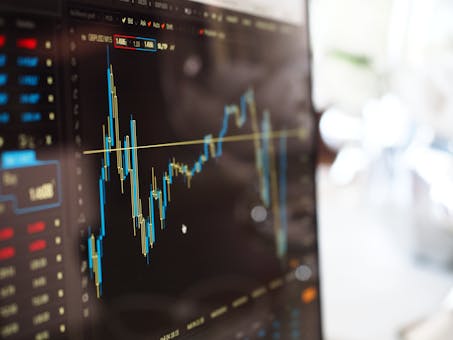
The first decision any trader must make is choosing a trading style that matches their time availability, risk tolerance, and experience.
Day trading involves opening and closing positions within the same day. Traders rely on technical analysis, price patterns, and momentum indicators. This style requires constant attention and fast decision making. It can be profitable, but it is mentally demanding and unforgiving of mistakes.
Swing trading focuses on capturing price movements over several days or weeks. Traders analyse trends, support and resistance levels, and broader market structure. This approach is more suitable for people who cannot watch charts all day but still want active involvement.
Position trading sits between trading and investing. Positions are held for weeks or months, based on macro trends, adoption narratives, and market cycles. This style reduces trading frequency but still requires timing entries and exits carefully.
Scalping is an advanced approach that involves making many small trades throughout the day. Profits per trade are small, so precision, low fees, and speed are essential. This method is not recommended for beginners.
There is no best strategy, only the one you can execute consistently.
Learning How Crypto Markets Move
Before risking capital, traders must understand what drives crypto prices. Unlike equities, crypto assets rarely have cash flows or balance sheets. Price movements are influenced by supply and demand, liquidity, leverage, and narrative.
Market cycles are especially important. Crypto markets typically move through accumulation, uptrend, distribution, and downtrend phases. Many traders lose money because they buy during euphoric peaks and sell during fear driven crashes.
Bitcoin often leads the market. When Bitcoin is stable or rising, capital flows into alternative cryptocurrencies. When Bitcoin falls sharply, most of the market follows. Ignoring Bitcoin dominance is one of the most common mistakes among new traders.
Macroeconomic factors also matter. Interest rates, inflation expectations, and liquidity conditions influence risk appetite across all asset classes, including crypto.
Using Technical Analysis Effectively
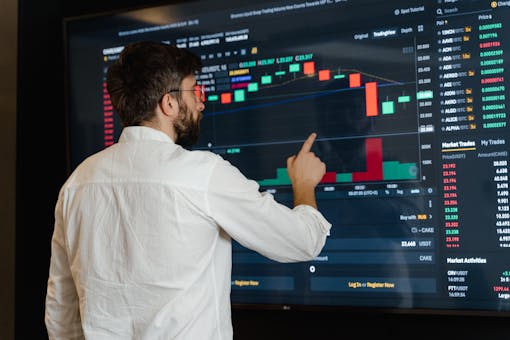
Technical analysis is a core skill in crypto trading. It involves studying price charts to identify patterns and probabilities rather than certainties.
Support and resistance levels represent areas where price has historically reacted. Buying near support and selling near resistance improves risk to reward ratios.
Trend analysis helps traders align with market direction. Trading against the trend is possible, but it increases risk significantly.
Indicators such as moving averages, RSI, and volume can help confirm signals, but they should not be used blindly. Indicators lag price and work best when combined with price action.
Successful traders keep charts simple. Overloading screens with indicators often leads to confusion and hesitation.
Risk Management in Crypto Trading
Risk management is the discipline of limiting potential losses in crypto trading by controlling how much capital is exposed to each trade. It determines whether a trader can survive losing periods and continue operating in volatile markets.
In practical terms, risk management involves defining the maximum acceptable loss before entering a trade. This is usually implemented through position sizing and stop-loss orders. Position sizing refers to adjusting the size of a trade so that a single loss does not materially damage the trading account.
A widely used guideline is to risk no more than one to two percent of total trading capital on any individual trade. This approach allows traders to withstand multiple losing trades in succession without exhausting their funds. The exact percentage may vary, but the principle of limiting downside exposure remains constant.
Stop-loss orders are predefined exit points that automatically close a trade when price reaches a certain level. Their purpose is not to predict market direction, but to cap losses when a trade does not work as expected. Consistent use of stop losses is one of the most important habits in professional trading.
Risk management also includes controlling leverage. Leverage allows traders to increase market exposure using borrowed funds, but it amplifies both gains and losses. Excessive leverage is a primary cause of rapid account liquidation in crypto markets. Prudent traders use leverage sparingly or avoid it entirely, especially during periods of high volatility.
Another key element of risk management is maintaining a favourable risk to reward ratio. This means structuring trades so that potential profits are larger than potential losses. For example, risking one unit of capital to gain two or more units creates positive expectancy even if not all trades are successful.
In summary, risk management in crypto trading is the systematic control of loss, exposure, and leverage. It does not guarantee profits, but it ensures that losses remain manageable, allowing skill and consistency to compound over time.
Selecting the Right Exchange and Tools
Choosing a reliable exchange is a foundational step. Traders should consider security, liquidity, fees, and regulatory standing. High liquidity reduces slippage and improves execution.
Trading fees can erode profits, especially for active traders. Understanding maker and taker fees is essential.
Charting platforms, portfolio trackers, and trading journals are valuable tools. A trading journal helps identify mistakes, emotional patterns, and areas for improvement over time.
Avoid relying on social media signals or paid groups promising guaranteed returns. Most profitable traders build their own systems rather than outsourcing decisions.
Developing a Trading Plan

A trading plan defines how you trade, when you trade, and why you trade. It removes emotion from decision making.
A solid plan includes entry criteria, exit rules, risk limits, and maximum exposure. It also defines which markets to trade and which to avoid.
Without a plan, traders react to price movements impulsively. This often leads to chasing losses or entering trades late.
Consistency matters more than creativity. Repeating a modest edge over time is how trading becomes profitable.
Managing Psychology and Emotions
Psychology is often underestimated, yet it is one of the hardest aspects of crypto trading.
Fear causes traders to exit winning positions too early or avoid valid setups. Greed encourages overtrading and excessive risk taking. Both lead to poor outcomes.
Losses are part of trading. Even the best traders lose regularly. The goal is not to avoid losses, but to ensure they remain small relative to gains.
Revenge trading, increasing position size after a loss, is a common path to account destruction. Stepping away after a losing trade is often the best decision.
Patience is a competitive advantage. Many traders fail because they trade too often, not because they lack opportunities.
Understanding Different Ways to Make Money in Crypto Trading

Spot trading involves buying and selling cryptocurrencies directly. It is the simplest and least risky form of trading, as losses are limited to the invested amount.
Futures trading allows traders to speculate on price movements without owning the asset. It enables short selling and leverage but carries higher risk.
Arbitrage exploits price differences across exchanges. While theoretically low risk, competition and fees often reduce profitability.
Grid trading uses automated orders placed at regular price intervals. It works best in range bound markets but struggles during strong trends.
Each method has advantages and limitations. Mixing strategies without understanding them usually leads to inconsistent results.
Avoiding Common Mistakes
Many traders lose money due to avoidable errors. Entering trades without a plan, ignoring stop losses, and trading based on hype are frequent causes of failure.
Another mistake is overconfidence after a winning streak. Markets change quickly, and strategies that worked in one environment may fail in another.
Lack of education is costly. Crypto markets reward those who invest time in learning and refining their approach.
Finally, unrealistic expectations lead to disappointment. Trading is not a guaranteed income source, especially in the early stages.
Is Crypto Trading Still Profitable

Crypto trading remains profitable for disciplined traders, but it is not easy money. Increased competition, institutional participation, and algorithmic trading have made markets more efficient.
Opportunities still exist due to volatility, global participation, and emerging sectors. However, the bar for success is higher than in earlier years.
Those who treat trading as a skill rather than a gamble stand the best chance of long term success.
Final Thoughts
Making money in crypto trading is possible, but it requires preparation, patience, and respect for risk. There are no shortcuts or guarantees.
Success comes from understanding market behaviour, applying consistent strategies, managing risk carefully, and controlling emotions. Most importantly, traders must accept that losses are part of the process.
Crypto trading rewards those who approach it as a professional discipline rather than a speculative thrill. For those willing to put in the work, the market offers opportunity, but only on its own terms.