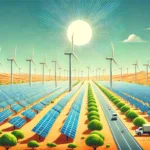

Short answer: no, but it is changing shape, and too little of it is reaching the places and projects that need it most. Headlines about ESG backlash, carbon market scandals, and higher interest rates make it easy to declare climate finance “over.” The data tell a different story: record flows, rapid growth in clean energy, yet persistent gaps for adaptation and for emerging and developing economies (EMDEs). The task is less about CPR and more about rewiring who takes which risks, in what currency, and for how long.
What the numbers really say
Global climate finance reached about $1.9 trillion in 2023, and early data indicate it surpassed $2 trillion in 2024, the highest on record. For the first time, private finance topped $1 trillion in a single year. Composition matters: mitigation (renewables, clean transport, efficiency, storage, grids) was roughly $1.78 trillion, while adaptation was about $65 billion, tiny relative to need. International flows to EMDEs rose to around $196 billion, still far short of requirements.
In the wider energy system, clean energy investment was about $2 trillion in 2024, pushing total energy investment above $3 trillion and making clean energy almost twice fossil spending. Imbalances remain. EMDEs outside China still attract only about 15% of global clean energy investment. A major reason is the higher cost of capital, often roughly double that of advanced economies, plus the prevalence of hard-currency debt rather than local-currency solutions.
On pledges, there was movement. The $100 billion goal for developing countries, missed in 2020, was finally reached in 2022 at roughly $116 billion. That is progress, even if it came two years late and remains below what is required.
“Dead”? Not quite. But parts are underperforming.
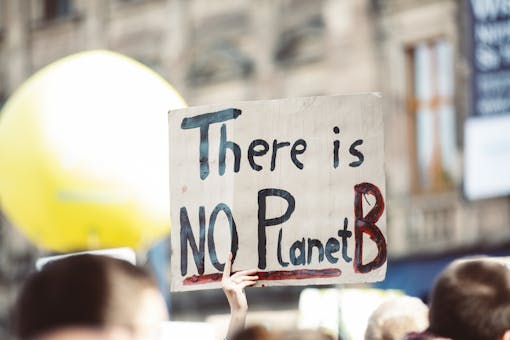
Adaptation finance is the perennial laggard. Extreme weather is intensifying, yet only a sliver of flows supports resilience in water, health, and coastal protection. With about $65 billion in 2023, adaptation is a rounding error next to mitigation.
EMDE access to affordable capital is the central choke point. Higher global rates, currency risk, and shallow local capital markets keep renewable power, grids, and resilience projects from pencilling out, even when technology costs fall. Clean energy investment in EMDEs (excluding China) is still only about 15% of the global total, with financing costs often at least twice those in rich countries.
Carbon markets were expected to complement real decarbonisation, not replace it. They have had a rough patch. Negotiators did not finalise Article 6 rules at COP28, which kept compliance-market growth on hold. The voluntary market shrank sharply in value amid quality concerns. Integrity efforts such as clearer standards and claims guidance are rebuilding confidence, but trust will take time.
Policy signals: more scaffolding, still not enough
At COP29 (Baku, 2024), countries agreed a New Collective Quantified Goal (NCQG): at least $300 billion per year by 2035 from developed countries for developing countries, plus an aspirational $1.3 trillion per year mobilised globally. This is a step up from $100 billion, but still below many estimates of need. Multilateral development banks also pledged to raise annual climate finance and crowd in more private capital by 2030.
The Loss and Damage Fund was operationalised at COP28 and has begun attracting money, but pledges remain modest, at roughly $786 million by April 2025. Symbolically important, financially small.
Meanwhile, domestic policy in major economies is doing heavy lifting. Industrial-policy incentives such as tax credits, auctions, and grid funding anchor demand and manufacturing. They are pushing clean-energy investment to record levels. These benefits do not automatically spill over to the lowest-income countries without deliberate risk sharing.
Blended finance: promise vs scale

After a slump, blended finance looks more active again. These are structures that use concessional or guarantee capital to crowd in private money. Deal volumes rebounded in 2023 and held steady in 2024, yet the market remains tiny, measured in billions rather than hundreds of billions. The instruments work, but they are not deployed at the scale or speed required.
So why does it feel like climate finance is “dying”?
Because the easy parts got easier, while the hard parts got harder. Solar costs fell and rich-country tax credits expanded. At the same time, grid build-out, transmission, storage, adaptation, and EMDE currency risk became more acute. Investors see pipelines, but also offtaker risk, FX volatility, tender delays, and local-law uncertainty. Higher interest rates and denser ESG scrutiny pushed some marginal projects below hurdle rates and cooled flows to “sustainable” funds, even as real-economy clean-energy capex kept climbing.
What would actually revive, and re-aim, climate finance?
1) Cut EMDE financing costs, not just announce totals.
Scale guarantees, first-loss tranches, and political-risk cover so blended structures become standard. Push MDBs and DFIs to provide local-currency lending or hedging, not only hard-currency debt.
2) Build bankable pipelines, especially for grids and adaptation.
Many countries lack shovel-ready projects with clear revenue models. Technical assistance, standardised PPAs and concessions, and outcome-based contracts can move projects from concept to financeable.
3) Make the NCQG real in annual budgets.
Translate $300 billion by 2035 into near-term appropriations, callable capital for MDBs, and contingency funding that backstops guarantees. Track delivery transparently to avoid another credibility gap.
4) Set clearer demand-side rules and timelines.
Predictable standards, such as efficiency codes, clean procurement, and phase-out schedules, de-risk private investment more than slogans. They also reduce reliance on discretionary subsidies.
5) Clean up carbon markets without over-promising.
Treat high-integrity credits as a narrow complement to deep operational cuts. Use them for hard-to-abate emissions and nature restoration, not as a primary strategy.
Investor takeaways
- Follow policy gravity. Clean-energy capex is compounding where policy is clearest. Grid and storage spend are rising as bottlenecks bite. Utilities, equipment makers, and grid developers in rule-stable markets remain central.
- Expect EMDE opportunity if risk is priced and shared. Public guarantees or multilateral wraps can turn “uninvestable” into attractive. Partner selection and contract quality are critical.
- Treat adaptation as a growth theme. Water systems, cooling, flood defences, resilient agriculture, and parametric insurance are still under-owned and likely to see policy-led scale-up.
- Carbon markets are maturing, not vanishing. Look for higher-integrity supply and buyers making credible claims. Avoid low-integrity credits. Expect volatility as standards tighten.
Verdict: very alive, poorly aimed
Climate finance is not dead. In the real economy, it is bigger than ever, and accelerating in power, grids, storage, and EVs. The issue is who bears risk and where. Without cheaper capital and better risk sharing for EMDEs, and without a serious lift in adaptation, the system will keep missing the point even as headline totals rise.
If the $300 billion target evolves from a headline into annual, structured, risk-sharing capital, and if carbon markets earn back trust with credible standards, the 2020s can still be the decade when finance truly aligns with climate outcomes. If not, the money will keep flowing, just not to the places where it changes the climate math.