The ultimate guide for founders, CFOs, and finance teams
Choosing the right fintech stack can make or break a company’s financial operations. Today, finance leaders are not only responsible for budgeting and compliance, but also for enabling growth through smart, scalable technology choices. Whether you are a B2B founder building a global marketplace, a CFO steering a SaaS scale-up, or a finance team tasked with managing complex payments, finding the best fintech tools is critical. Therefore, here comes our Top 100 Fintech Tools and Platforms for Businesses.
Jump to sections
In 2025, the line between finance and technology has blurred. Modern finance teams rely heavily on embedded finance, SaaS fintech software, finance APIs, and cloud-based platforms to run everything from payments to compliance to cash management. This guide covers the top 100 fintech tools across key categories including banking APIs, billing, KYC/AML, FX, crypto tools, and open banking.
Banking-as-a-Service & Embedded Banking APIs

Let’s start the top 100 fintech tools and platforms with embedded finance. Embedded finance has exploded in recent years, allowing non-bank companies to offer banking products like accounts, cards, and payments.
These finance APIs make it possible to launch financial services quickly without building a bank from scratch.
1. Stripe Treasury
Stripe Treasury lets platforms embed banking experiences such as accounts, stored balances, and programmatic money movement using familiar Stripe APIs. It pairs naturally with Stripe Issuing, Billing, and Payments, which simplifies settlement flows and reconciliation across your stack. Treasury taps Stripe’s network of regulated bank partners to deliver compliant access to local payment rails without you holding a licence. The platform exposes clean events for ledgers and audit trails, which helps finance teams close faster and stay compliant. Developers benefit from strong documentation, webhooks, and a proven ecosystem of integrations.
Best for: SaaS platforms adding financial services for users.
2. Unit
Unit provides a full BaaS toolkit, including accounts, cards, payments, and lending primitives so you can launch a fintech product quickly. It includes built-in ledgering and compliance workflows that reduce the need to stitch together multiple vendors. Prebuilt dashboards let ops teams manage disputes, KYC exceptions, and program settings without engineering tickets. Sandboxes and SDKs accelerate development and shorten time to market. Unit’s sponsor bank relationships help startups clear regulatory hurdles while they validate product market fit.
Best for: Startups launching fintech products fast.
3. Solaris
Solaris offers regulated banking infrastructure across the EU so brands can embed accounts, cards, and payments under a unified framework. Its platform handles European regulatory obligations and connects to domestic rails, which simplifies expansion beyond a single market. Solaris provides modular components like IBAN accounts, SEPA access, and card issuing with program management. Enterprise clients benefit from established compliance and risk controls aligned to EU expectations. This reduces legal complexity for companies scaling across multiple European jurisdictions.
Best for: Companies expanding across Europe.
4. Treasury Prime
Treasury Prime combines direct sponsor bank relationships with an API layer for deposits, payments, and ledger services. The model aims to give builders bank-grade control while retaining developer velocity. Detailed webhooks and reporting endpoints support reconciliation, cash reporting, and operational monitoring. Treasury Prime’s network approach can provide resiliency if you need multiple bank partners over time. Finance teams appreciate the transparency into bank operations and settlement flows.
Best for: US-based fintechs needing deep bank integrations.
5. Treezor
Treezor delivers accounts, issuing, acquiring, and payment processing in a single API, with strong coverage in Europe. Programs can issue cards, create IBANs, manage KYC, and orchestrate payouts without separate providers. A unified ledger and back-office console give finance teams end-to-end visibility into balances, fees, and disputes. Treezor’s program management and compliance capabilities reduce the operational lift of running multi-product financial offerings. Its connectivity to European rails helps with fast, local transfers and settlement.
Best for: Platforms requiring multi-product financial offerings.
6. ClearBank
ClearBank provides real-time clearing and embedded accounts with direct connectivity to UK payment schemes such as Faster Payments, Bacs, and CHAPS. Clients can open safeguarded accounts, route payments, and reconcile activity with accurate timestamps. ClearBank’s infrastructure is designed to minimise operational risk while delivering low-latency processing. The platform exposes granular reporting that supports treasury operations and regulatory audits. For UK-centric programs, native access to domestic rails is a major advantage.
Best for: Fintechs needing access to UK payments rails like FPS, BACS, and CHAPS.
7. Railsr
Railsr, formerly Railsbank, offers embedded cards, accounts, and payments so brands can launch white-label financial products. The platform abstracts scheme rules, settlement, and disputes into manageable workflows that product and ops teams can adopt. Its modular approach allows you to start with one capability, like issuing, and expand later. Dashboards provide visibility across programs, spend controls, and risk settings. This makes it easier to iterate on financial features without rebuilding your stack.
Best for: Brands looking to offer white-labelled financial products.
8. Griffin
Griffin is building an API-first bank that aims to combine direct banking services with a developer-friendly experience. The goal is to reduce integration friction by offering modern APIs, robust webhooks, and clear sandbox behaviours from day one. Griffin focuses on strong ledger design and observability so finance and engineering share a single source of truth. Documentation and tooling are designed to shorten cycles between product ideas and compliant launches. Early-stage teams benefit from a bank partner optimised for builders.
Best for: Early-stage fintechs and financial infrastructure builders.
9. Mbanq
Mbanq provides global BaaS coverage spanning card issuing, lending, core banking, and compliance-as-a-service. It supports a range of geographies and program types, which helps brands expand into emerging markets. The platform includes operational tooling for KYC, AML, and dispute management to keep teams efficient. By bundling core capabilities under one roof, Mbanq aims to reduce vendor sprawl and integration risk. This can speed up launches where local partners and regulatory navigation are hurdles.
Best for: Businesses expanding into emerging markets.
10. Bond
Bond exposes APIs for card issuance, account creation, compliance workflows, and money movement inside non-financial apps. The approach focuses on embedding finance into existing user journeys without heavy UX compromises. Admin tools allow risk teams to adjust controls, while developers rely on consistent events for ledgers and analytics. Bond’s architecture is designed to scale as volumes grow, with attention to monitoring and alerting. This helps companies maintain reliability while shipping new financial features.
Best for: US fintechs building financial features into non-financial apps.
11. Column Bank
Column Bank is a developer-first bank with a full US banking licence, built to provide core financial services directly via APIs. Unlike traditional sponsor-bank arrangements, Column gives fintechs direct access to banking infrastructure, which reduces intermediaries and complexity. Its APIs cover deposit accounts, payments, and ledger services with a strong focus on programmability and transparency. By offering a regulated entity and a technical platform in one, Column appeals to companies that want more control and fewer constraints. Finance and operations teams also benefit from clearer regulatory lines of sight and direct compliance management.
Best for: Companies needing maximum flexibility and direct access to the US banking system.
12. Cross River
Cross River combines embedded payments, banking, and lending infrastructure with one of the most compliance-forward reputations in the industry. It works with a wide range of fintechs, including high-growth consumer lenders and B2B payment platforms, to ensure their offerings meet regulatory requirements. The bank provides direct access to payments rails, lending capabilities, and settlement systems underpinned by its US bank charter. Developers can integrate via APIs, while risk and compliance teams trust Cross River’s long-standing regulatory expertise. This dual strength of technical access and compliance rigor makes it a safe choice for companies scaling financial products in the US.
Best for: Fintechs requiring robust regulatory alignment in the US.
13. Bankable
Bankable is a European provider offering modular BaaS solutions across virtual accounts, card management, and e-wallet infrastructure. It enables companies to build custom banking experiences by assembling modular capabilities rather than being locked into a single framework. Enterprises benefit from its global partnerships with banks and schemes, which give access to multi-jurisdictional coverage. Bankable also supports white-label programs, making it a good fit for corporate or institutional clients launching digital initiatives. The platform includes robust reconciliation, reporting, and compliance tooling to reduce back-office burden.
Best for: Enterprises launching digital banking initiatives.
14. Monavate
Monavate is a UK-based banking-as-a-service provider offering card issuing, programme management, and payment services. Its API-first platform is designed to simplify the process of launching new card programs, with fast onboarding and prebuilt compliance frameworks. Monavate works closely with payment networks to ensure seamless integration and regulatory approval. The company provides operational dashboards for managing cards, customer accounts, and transaction monitoring in real time. This makes it particularly attractive to businesses looking to test or expand payment solutions quickly in the UK and EU.
Best for: Businesses seeking quick-to-launch card solutions.
15. Weavr
Weavr is a plug-and-play embedded finance platform designed for non-financial companies, particularly SaaS businesses. It provides ready-made templates for use cases like employee benefits, marketplaces, and B2B payments, removing much of the engineering overhead. By abstracting the complexity of working with banks and regulators, Weavr enables faster go-to-market for teams without in-house fintech expertise. Its no-code and low-code approach makes it accessible to product teams that want to embed finance but lack deep developer resources. This flexibility supports experimentation, allowing companies to validate new financial products without committing to a large infrastructure build.
Best for: SaaS companies embedding financial services without heavy engineering lift.
16. Galileo (by SoFi)
Galileo is a leading financial infrastructure platform that powers some of the biggest names in fintech. Its APIs cover card issuing, deposit management, payments, and lending, offering full-stack capabilities for ambitious fintech projects. Galileo’s infrastructure is battle-tested at scale, making it suitable for high-growth companies expecting large transaction volumes. The platform also provides fraud prevention, compliance monitoring, and dispute resolution as part of its offering. With SoFi as a parent company, Galileo benefits from strong financial backing and regulatory experience. For businesses, this translates into reliability, scalability, and confidence when launching new financial products.
Best for: Companies looking to launch full-stack fintech products quickly.
Billing, Invoicing & Revenue Management

Let’s continue the Top 100 fintech tools and platforms with getting paid, that is billing and invoicing. Billing complexity grows quickly as businesses scale across customers, geographies, and pricing models. Manual invoicing and payment collection become unsustainable, while errors can damage cash flow and customer trust. Modern SaaS fintech software for billing and revenue management automates processes, ensures compliance, and accelerates growth.
Here are the leading tools powering financial operations:
17. Chargebee
Chargebee is a subscription billing and revenue management platform built for SaaS and subscription-first businesses. It supports recurring billing, invoicing, proration, upgrades, downgrades, and complex pricing structures such as tiered and volume-based plans. Chargebee integrates closely with major payment providers and accounting systems, which simplifies reconciliation and month-end close. Its built-in revenue recognition supports compliance with standards such as ASC 606 and IFRS 15, helping finance teams manage deferred revenue accurately. The platform also includes dunning workflows, analytics, and subscription lifecycle reporting to reduce churn and improve cash collection. Chargebee is widely adopted by scaling SaaS companies that need flexibility without building custom billing infrastructure.
Best for: SaaS companies managing complex subscription models.
18. Recurly
Recurly focuses on subscription billing optimisation, with a strong emphasis on reducing churn and improving revenue recovery. The platform supports flexible billing cycles, add-ons, coupons, and pricing experiments that help businesses adapt to customer behaviour. Recurly’s standout capability is its intelligent dunning and retry logic, which uses network data and adaptive schedules to recover failed payments. It integrates with major payment gateways and CRM systems, giving revenue and customer success teams shared visibility into subscription performance. Detailed analytics around churn, lifetime value, and retention help teams make data-driven pricing and product decisions. Recurly is designed to operate reliably at scale, making it popular among high-volume subscription businesses.
Best for: High-volume subscription businesses seeking to minimise failed payments.
19. Paddle
Paddle positions itself as a merchant of record platform built specifically for SaaS companies selling globally. It combines payments, subscription billing, invoicing, and tax compliance into a single system. By acting as the seller of record, Paddle handles VAT, GST, sales tax calculation, collection, and remittance across jurisdictions. This removes a major operational and legal burden for software companies expanding internationally. Paddle also manages chargebacks, fraud prevention, and local payment methods, improving conversion rates in global markets. The platform is tightly integrated, reducing the need for multiple vendors and simplifying financial operations for lean teams.
Best for: Software businesses selling globally without handling sales tax complexities directly.
20. Stripe Billing
Stripe Billing extends Stripe’s payments platform with tools for recurring, usage-based, and hybrid pricing models. It supports metered billing, tiered pricing, discounts, and automated invoicing within the same ecosystem as Stripe Payments. Payment retries, smart dunning, and hosted customer portals help improve collection rates with minimal configuration. Because it shares infrastructure with Stripe’s APIs, developers can implement billing logic quickly and maintain consistency across checkout, payments, and reporting. Finance teams benefit from real-time data, clean exports, and integrations with accounting systems. Stripe Billing works best when billing is tightly coupled with product usage and payments.
Best for: Startups and enterprises already using Stripe for payments.
21. Zoho Subscriptions
Zoho Subscriptions is a subscription billing solution designed for small and mid-sized businesses that want simplicity and affordability. It supports recurring billing, invoicing, payment retries, and multi-currency subscriptions without heavy setup. As part of the broader Zoho ecosystem, it integrates seamlessly with Zoho Books, CRM, and analytics tools, creating a unified view of customers and revenue. The platform includes basic dunning management, tax handling, and reporting suitable for growing businesses. While it may not match enterprise-grade billing platforms in complexity, Zoho Subscriptions offers strong value for teams that want reliable billing without extensive customisation.
Best for: SMEs needing an affordable, scalable billing system.
22. Maxio
Maxio is a SaaS revenue management platform created from the merger of Chargify and SaaSOptics, combining billing and financial operations in one system. It supports subscription and contract billing, usage-based pricing, and complex invoicing structures common in B2B SaaS. Maxio places strong emphasis on revenue recognition, offering ASC 606-compliant workflows that connect billing data directly to financial reporting. Advanced analytics provide visibility into MRR, churn, cohort performance, and forecasting. By bridging billing and finance, Maxio helps reduce manual work and spreadsheet dependency for scaling SaaS organisations.
Best for: Growth-stage SaaS companies with complex customer contracts.
23. Zenskar
Zenskar is an AI-native order-to-cash platform designed for modern SaaS and usage-based businesses. It replaces fragmented billing, revenue, and reporting workflows with a unified system powered by an AI agent. Zenskar supports any pricing model, including subscriptions, usage-based billing, milestones, and hybrid contracts. The platform automates invoicing, revenue recognition, and analytics, reducing reliance on spreadsheets and manual reconciliations. Finance teams can query revenue data, generate reports, and manage complex contracts through conversational workflows. Zenskar is built for teams dealing with evolving pricing strategies and operational complexity as they scale.
Best for: Modern finance teams with any pricing model or complex contracts, looking to automate their order-to-cash process.

24. Invoiced
Invoiced is a cloud-based billing and accounts receivable platform designed to help businesses automate invoicing, collections, and the full receivables lifecycle. It supports flexible invoice workflows, payment links, and customer portals that make it easier for buyers to pay on time with fewer back-and-forth emails. Finance teams can set up automated reminders, escalation sequences, and payment plans to reduce manual chasing and improve collection consistency. Invoiced also provides reporting and dashboards that help teams monitor outstanding balances, ageing, and collector performance in real time. For organisations managing larger B2B invoice volumes, the platform aims to bring discipline and repeatability to AR operations without relying on spreadsheets. Integrations with accounting systems support cleaner reconciliation and a smoother month-end close.
Best for: Mid-sized businesses seeking to streamline receivables operations.
25. Bill.com
Bill.com is a business payments and financial workflow platform that modernises accounts payable and accounts receivable for small and mid-sized organisations. It centralises invoice capture, approval routing, and payment execution so finance teams can replace email chains and manual bank logins with a controlled process. On the payables side, Bill.com supports vendor onboarding, approval policies, and multiple payment methods, while on the receivables side it helps automate invoicing and accelerate collections. A key strength is its deep integration with major accounting packages, which reduces duplicate data entry and keeps ledgers aligned. Role-based controls and audit trails support governance, especially as organisations scale and approval complexity increases. Bill.com is often adopted when teams want a single operational layer between accounting, banking, and day-to-day payment work.
Best for: SMEs modernising back-office finance operations.
26. Ordway
Ordway is a billing and revenue automation platform built for companies managing flexible contracts, usage-based pricing, and hybrid SaaS business models. It supports subscription billing alongside complex invoicing structures such as milestones, overages, tiered usage, and negotiated enterprise terms. Ordway is designed to handle the messy middle between product usage data, customer contracts, and finance reporting, reducing the need for manual spreadsheet stitching. The platform includes automation for invoicing, proration, amendments, renewals, and collections workflows, helping teams maintain accuracy as pricing evolves. Finance teams benefit from revenue automation features that help align billing activity with reporting requirements, while operations teams gain visibility through dashboards and customer-level controls. Ordway fits well when a business outgrows basic subscription tools and needs more contract flexibility without building a bespoke billing engine.
Best for: SaaS platforms evolving toward complex usage and tiered pricing.
27. YayPay by Quadient
YayPay, part of Quadient, is an accounts receivable automation platform focused on improving collections efficiency and giving finance teams better cash flow visibility. It combines invoicing support, collections workflow automation, cash application capabilities, and analytics into a single AR operations layer. Teams can segment customers, trigger automated reminders, and manage collector tasks from a structured worklist, reducing time spent on repetitive chasing. YayPay also offers predictive insights that help prioritise accounts likely to delay payment and forecast expected cash receipts more accurately. By standardising follow-up processes and improving communication consistency, it aims to reduce days sales outstanding and tighten working capital. Integrations with ERP and accounting systems help keep customer balances current and reduce reconciliation friction.
Best for: Finance teams aiming to improve DSO and cash flow forecasting.
KYC, AML & Identity Verification Platforms

Next in the top 100 fintech tools and platforms is compliance. It is non-negotiable for any business handling payments, onboarding customers, or moving money across borders. Strong Know Your Customer (KYC) and Anti-Money Laundering (AML) frameworks are now expected not just by regulators, but by enterprise partners and customers.
The best SaaS fintech software for KYC and AML helps companies automate checks, improve onboarding conversion, and stay audit-ready.
Here are the top platforms driving innovation in this critical space:
28. Alloy
Alloy is a decisioning platform that helps fintechs and financial institutions orchestrate KYC, fraud, and compliance checks through a single workflow layer. Instead of locking teams into one data provider, Alloy allows companies to combine multiple identity, fraud, and risk signals and route customers dynamically based on risk profiles. This flexibility helps improve approval rates while maintaining strong controls. Alloy’s rules engine enables non-technical teams to adjust thresholds, add providers, or change flows without engineering work. Real-time monitoring and case management tools give compliance teams visibility into onboarding outcomes and ongoing customer behaviour. Alloy is often used by teams that want to move beyond static KYC checks and build adaptive, risk-based onboarding.
Best for: Digital banks and B2B fintechs needing dynamic risk management.
29. Persona
Persona is an identity verification platform focused on highly customisable and user-friendly KYC experiences. It allows companies to design branded verification flows that match their product experience, covering ID document checks, selfies, biometrics, and database lookups. Persona supports a wide range of verification methods that can be combined or adapted depending on user risk, geography, or use case. Developers benefit from clean APIs and SDKs, while compliance teams gain access to audit trails, dashboards, and case review tools. The platform places strong emphasis on conversion and usability, helping businesses reduce drop-off during onboarding. Persona is often chosen when customer experience is a strategic differentiator, not just a compliance requirement.
Best for: Companies needing user-friendly, brandable KYC experiences.
30. Onfido
Onfido provides AI-powered identity verification services that combine document checks, facial biometrics, and database screening. Its technology is designed to verify users quickly while detecting forgery, impersonation, and other forms of fraud. Onfido supports global document coverage, which helps businesses onboard users across multiple countries with consistent standards. The platform offers APIs and SDKs that make it easy to embed verification into mobile and web applications. Onfido also provides ongoing monitoring and signals that support lifecycle compliance beyond initial onboarding. It is widely used by companies that need fast, scalable verification without compromising on accuracy.
Best for: Businesses expanding globally that require high verification speed.
31. Jumio
Jumio is one of the most established providers in digital identity verification and AML compliance. Its platform covers ID document verification, biometric checks, liveness detection, and AML screening across a broad set of jurisdictions. Jumio’s long history in regulated industries has shaped strong processes for auditability, data protection, and regulatory reporting. Enterprises use Jumio to support onboarding at scale while meeting stringent compliance expectations. The platform integrates with existing risk and compliance systems and supports complex approval and review workflows. Jumio is often selected by organisations operating in highly regulated environments where consistency and defensibility matter.
Best for: Enterprises with stringent regulatory requirements.
32. Veriff
Veriff specialises in video-based and AI-driven identity verification with a focus on fraud prevention and fast onboarding. The platform analyses user behaviour, video signals, and document authenticity to detect high-risk attempts in real time. Veriff supports a wide range of identity documents and languages, making it suitable for international platforms. Its verification flows are designed to minimise friction while maintaining strong detection rates. Real-time decisions and manual review options allow companies to balance speed and control. Veriff is commonly used in sectors where fraud risk is high but user experience remains critical.
Best for: Platforms prioritising fraud prevention without sacrificing user experience.
33. Trulioo
Trulioo is a global identity verification platform offering access to data sources across more than 195 countries. It enables businesses to verify individuals and businesses using local databases, credit bureaus, government records, and alternative data. This breadth of coverage makes Trulioo particularly valuable for companies expanding into new markets with varying regulatory requirements. The platform provides a single API layer while handling the complexity of regional data differences behind the scenes. Compliance teams benefit from configurable workflows and detailed reporting. Trulioo is often adopted by global fintechs that need consistent KYC processes across multiple jurisdictions.
Best for: Fintechs expanding across multiple jurisdictions.
34. IDnow
IDnow is a European identity verification provider offering digital identity checks and electronic signing services compliant with EU regulations. Its solutions align with eIDAS and GDPR requirements, making it well suited for regulated industries across Europe. IDnow supports automated verification as well as live video identification, which is required in some jurisdictions. The platform is widely used by banks, insurers, and telecom providers operating under strict European compliance frameworks. By combining identity verification with trust services, IDnow supports end-to-end digital onboarding journeys. It is particularly relevant for companies focused on the European market.
Best for: Companies targeting European markets with strict regulatory needs.
35. Socure
Socure uses machine learning and alternative data to deliver digital identity verification with a strong focus on accuracy and conversion. Its models analyse a wide range of signals to distinguish legitimate users from fraudsters while minimising false positives. Socure is designed for high-volume environments where even small improvements in approval rates have material revenue impact. The platform supports identity verification, fraud prevention, and risk scoring through APIs and dashboards. Financial institutions often use Socure to modernise onboarding while reducing manual review rates. It is particularly valued in competitive markets where frictionless onboarding drives growth.
Best for: High-volume platforms requiring maximum conversion rates.
36. ComplyAdvantage
ComplyAdvantage is an AML and financial crime platform that provides real-time screening, transaction monitoring, and adverse media detection. Its data sets are continuously updated using machine learning and natural language processing to capture emerging risks. The platform helps compliance teams screen customers, monitor transactions, and investigate alerts with greater efficiency. ComplyAdvantage also supports sanctions screening and ongoing monitoring across customer lifecycles. Its APIs and dashboards allow fintechs to embed compliance processes directly into operations. The platform is widely used by organisations scaling quickly without wanting to scale compliance headcount at the same pace.
Best for: Financial institutions and fintechs scaling compliance teams efficiently.
37. Sumsub
Sumsub is an all-in-one compliance platform covering KYC, KYB, AML screening, and transaction monitoring. It offers flexible onboarding flows, video verification, risk scoring, and ongoing monitoring from a single interface. Sumsub is popular among crypto and Web3 businesses due to its support for higher-risk use cases and global user bases. The platform allows teams to customise verification steps based on geography, asset type, or transaction behaviour. Compliance teams benefit from unified dashboards and case management tools. Sumsub is often chosen by companies that need broad coverage without stitching together multiple compliance vendors.
Best for: Crypto exchanges, DeFi platforms, and Web3-native businesses.
38. Unit21
Unit21 is a no-code risk and compliance operations platform designed to help teams detect and manage fraud, AML risks, and suspicious activity. It allows compliance and risk teams to build rules, workflows, and alerting systems without relying heavily on engineering resources. Unit21 centralises transaction monitoring, case management, and reporting in one system. The platform is particularly useful for adapting quickly to new fraud patterns or regulatory expectations. By giving non-technical teams more control, Unit21 helps organisations remain agile as volumes and complexity grow. It is often used where speed of iteration is as important as detection accuracy.
Best for: Companies prioritising fraud prevention and regulatory agility.
Payments & FX Management

Let’s continue the top 100 fintech tools and platforms with payments and foreign exchange (FX) management. Managing payments and FX is mission-critical for businesses operating across borders or handling multi-currency revenue streams. High fees, slow settlement, and poor transparency can erode margins and create operational headaches. The best fintech tools for payments and FX enable faster, cheaper, and smarter money movement, backed by powerful APIs and modern dashboards.
Here are the top platforms reshaping how businesses manage payments and foreign currency flows:
39. Airwallex
Airwallex is a global payments and FX platform offering multi-currency business accounts, international transfers, and card issuing through a single system. It enables companies to hold, convert, and pay in multiple currencies with lower fees than traditional banks. Airwallex provides APIs and dashboards that support global payouts, embedded finance use cases, and cross-border commerce. Finance teams benefit from transparent FX pricing and consolidated reporting across currencies. The platform is widely used by companies expanding internationally that want modern infrastructure without opening local bank accounts in every market.
Best for: Startups and enterprises expanding internationally.
40. Wise Business
Wise Business provides multi-currency accounts and international payments using mid-market exchange rates with transparent pricing. Businesses can hold and manage balances in multiple currencies and send payments to partners, suppliers, and employees worldwide. Wise focuses on simplicity and cost efficiency, making FX expenses predictable and easy to understand. The platform integrates with accounting tools and supports batch payments and local account details in many countries. Wise Business is often used by smaller teams that want global reach without the overhead of traditional banking relationships.
Best for: SMEs needing efficient cross-border banking.
41. Payoneer
Payoneer offers multi-currency accounts, global payout solutions, and working capital products for digital businesses. It enables companies and freelancers to receive payments from international marketplaces and clients as if they had local bank accounts. Payoneer also supports mass payouts, making it popular with platforms and marketplaces. Its additional financing products help smooth cash flow for sellers waiting on receivables. The platform is widely used in cross-border commerce and services where traditional banking access is limited or costly.
Best for: Freelancers, exporters, and marketplace sellers.
42. Kantox
Kantox specialises in automated FX risk management for businesses with recurring international exposure. The platform helps companies manage currency volatility through dynamic hedging, automated execution, and forecasting tools. Kantox integrates with ERP and treasury systems to align FX strategy with operational cash flows. By automating hedging decisions, it reduces reliance on manual intervention and spreadsheet-based planning. Kantox is often adopted by mid-sized companies where FX exposure has become material but treasury teams remain lean.
Best for: Mid-sized businesses managing international receivables and payables.
43. OFX
OFX is a non-bank international money transfer provider offering competitive exchange rates and personalised service. It supports large-value transfers and recurring payments for businesses operating across borders. Unlike purely self-serve platforms, OFX provides dedicated account management, which appeals to companies wanting human support alongside digital tools. The platform focuses on transparency and reliability rather than complex financial products. OFX is often chosen by SMEs that want predictable international payments without dealing with traditional banks.
Best for: SMEs seeking personalised FX solutions without the complexity of traditional banks.
44. Mercury
Mercury is a US-based digital bank designed for startups and technology-driven businesses. It offers business checking and savings accounts, virtual and physical cards, and integrations with modern finance tools. Mercury simplifies account opening and provides clean interfaces for managing cash and payments. While primarily US-focused, it supports international wires and startup-friendly features such as API access and automated bookkeeping integrations. Mercury is commonly used by early-stage and VC-backed companies looking for a modern banking experience.
Best for: VC-backed startups and tech-first companies.
45. Currencycloud
Currencycloud provides APIs for FX conversion, multi-currency wallets, and international payments infrastructure. It powers many fintech platforms that want to embed cross-border payments into their own products. Currencycloud handles regulatory complexity and bank connectivity behind the scenes, allowing partners to focus on customer experience. Its API-first approach makes it suitable for B2B use cases and financial platforms. Currencycloud is widely adopted where payments and FX are core product features rather than back-office functions.
Best for: Platforms building cross-border payment functionality into their services.
46. Nium
Nium is a global payments infrastructure platform offering real-time payments, card issuing, payroll, and embedded FX services. It supports high-volume cross-border disbursements and payouts through a single integration. Nium’s strength lies in its geographic reach and ability to handle complex payment flows at scale. The platform serves banks, fintechs, and enterprises that need reliable global payment capabilities. Its modular approach allows clients to adopt services gradually as needs evolve.
Best for: Platforms requiring cross-border disbursements at scale.
47. Checkout.com
Checkout.com is best known for card acquiring, but it also offers global payout and disbursement capabilities. The platform supports sending funds to partners, sellers, or customers across multiple regions. Checkout.com focuses on performance, reliability, and global coverage, particularly for internet-first businesses. Its unified reporting helps finance teams reconcile inbound and outbound flows. Checkout.com is often used by marketplaces and platforms where payments are a core operational function.
Best for: Marketplaces and platforms handling multi-region payouts.
48. Payoneer Capital Advance
Payoneer Capital Advance is a working capital product designed for sellers, service providers, and small businesses that receive revenue through Payoneer. Instead of relying on traditional credit scoring alone, it provides advances based on expected future receivables and historical payment flows. This approach can unlock funding for businesses that have strong sales performance but limited access to bank lending. The product is typically integrated into the Payoneer experience, which makes eligibility, disbursement, and repayment feel operational rather than like a separate loan process. Repayments are commonly collected automatically from incoming receivables, smoothing cash flow and reducing the friction of manual repayments. For seasonal businesses or marketplace sellers managing inventory cycles, Payoneer Capital Advance can provide liquidity when timing gaps between sales and cash receipts create pressure.
Best for: Marketplace sellers managing seasonal income fluctuations.
Crypto & Web3 Finance

Next in the top 100 fintech tools is crypto & Web3 finance platforms. These are no longer fringe experiments, they are becoming critical parts of the modern financial ecosystem. Companies dealing with digital assets, whether for treasury management, payments, or custody, need robust and compliant solutions. The best fintech tools for crypto enable safe, scalable engagement with blockchain-based finance.
Here are the leading platforms empowering businesses to navigate the crypto economy:
49. Fireblocks
Fireblocks is an enterprise digital asset platform focused on secure custody, transfers, and treasury management for institutions and regulated fintechs. It is widely used for managing private keys and executing transactions across exchanges, custodians, and blockchain networks with strong security controls. Fireblocks’ core strength is its security architecture and policy engine, which enables organisations to define approvals, limits, and governance rules for digital asset movement. The platform supports institutional workflows such as whitelisting, multi-party approvals, and real-time monitoring, which reduces operational risk. It also offers connectivity to a broad ecosystem of counterparties and networks, helping teams scale trading, settlement, and treasury activity without building bespoke integrations. For companies handling meaningful crypto volumes, Fireblocks provides an operational layer that aligns security, compliance, and transaction velocity.
Best for: Institutions and fintechs needing secure digital asset infrastructure.
50. Circle
Circle is best known as the issuer of USDC, one of the most widely used regulated stablecoins, and it also provides APIs for payments, treasury operations, and digital asset services. Businesses use Circle to accept, hold, and send stablecoin payments, which can reduce cross-border friction and accelerate settlement compared with traditional banking rails. Circle’s programmable infrastructure supports use cases such as marketplace payouts, international remittances, treasury management, and on-chain payment flows. For fintech platforms, Circle can serve as a bridge between traditional fiat systems and blockchain-based transfers, especially when customers or partners operate globally. Compliance and reporting capabilities help organisations implement stablecoin-based flows with clearer governance than ad hoc crypto integrations. Circle is often selected when stablecoin settlement is a strategic capability, not an experimental feature.
Best for: Platforms accepting or disbursing stablecoin payments.
51. Bitwave
Bitwave is a crypto accounting, tax, and compliance platform designed for businesses that transact in digital assets. It helps finance teams track on-chain activity, reconcile transactions across wallets and exchanges, and produce accounting-ready outputs aligned with corporate reporting needs. Bitwave supports workflows such as cost basis tracking, gain and loss calculation, invoice reconciliation, and audit trails for crypto assets. Integrations with ERPs and accounting systems reduce manual entry and improve close processes for organisations with frequent crypto activity. The platform is particularly useful for companies dealing with payroll in crypto, treasury holdings, token operations, or payment acceptance. By automating the messy parts of crypto accounting, Bitwave helps teams stay compliant and reduce the operational risk of inaccurate reporting.
Best for: Companies needing GAAP-compliant crypto accounting.
52. Safe
Safe is a multi-signature wallet and on-chain account platform designed for team-based control of crypto assets. It enables organisations to require multiple approvals for transactions, which improves governance and reduces single-point-of-failure risk. Safe is widely used by DAOs, startups, and investment groups to manage treasuries, execute payments, and interact with DeFi protocols in a controlled way. Its permissioning model supports role-based access, transaction batching, and policy-driven approvals that mirror corporate controls in a blockchain environment. Safe also integrates with a growing ecosystem of tools for treasury reporting, risk management, and governance, making it more than a basic wallet. For teams managing shared assets, Safe provides a practical balance between security, control, and operational speed.
Best for: DAOs, startups, and funds managing group-controlled crypto assets.
53. Anchorage Digital
Anchorage Digital is a regulated digital asset platform offering custody, trading, staking, and governance services for institutions. It operates with a strong emphasis on security, compliance, and operational robustness, which appeals to enterprises that need regulated infrastructure for crypto exposure. Anchorage provides custody designed for institutional standards, alongside services that allow clients to participate in staking or governance without compromising control frameworks. For organisations that want crypto services under a regulated umbrella, Anchorage can reduce vendor complexity by bundling custody and related capabilities. It is often used by institutions that want to hold or deploy digital assets while maintaining clearer regulatory lines of sight and risk management discipline.
Best for: Enterprises needing regulated crypto services in the US.
54. TaxBit
TaxBit is a digital asset tax and accounting platform that helps organisations automate compliance across crypto transactions. It supports calculation of gains and losses, reporting workflows, and audit-ready documentation, particularly for high-volume environments. TaxBit integrates with exchanges, wallets, and internal systems to ingest transaction data and standardise it for finance and compliance reporting. This is valuable for businesses that process crypto payments, hold treasury assets, or support customers transacting in digital assets. By automating classification and reporting, TaxBit reduces the risk of errors that can arise when teams attempt to handle crypto tax manually. It is commonly adopted by companies that need repeatable compliance processes as crypto activity scales.
Best for: Businesses needing crypto tax compliance at scale.
55. Copper
Copper provides digital asset custody, settlement, and prime services aimed at institutional clients. It focuses on secure storage and efficient settlement workflows that support active trading and portfolio management. Copper’s infrastructure is designed to reduce counterparty risk during settlement, which is a key concern for institutions operating across multiple venues. The platform supports operational controls, governance, and reporting suitable for professional asset managers. Copper is typically used by hedge funds, market makers, and institutional investors who need custody and settlement solutions aligned with institutional risk expectations.
Best for: Hedge funds, family offices, and high-frequency trading desks active in crypto.
56. Metamask Institutional
MetaMask Institutional is an enterprise-oriented offering built to support organisations accessing Web3 and DeFi with stronger controls than a consumer wallet. It focuses on governance, permissions, and compliance workflows that help teams manage access and approvals across multiple users. For institutions interacting with DeFi protocols, NFTs, or token-based ecosystems, the challenge is often operational control, not just wallet functionality. MetaMask Institutional aims to bridge that gap by supporting team access models and integrations with custody providers and compliance tools. This makes it easier for organisations to participate in on-chain activity while retaining oversight and auditability. It is often used where a familiar wallet experience is valuable, but enterprise-grade control is non-negotiable.
Best for: Institutions needing secure access to DeFi and NFTs.
57. BitGo
BitGo is a long-standing provider of digital asset custody, wallet infrastructure, and settlement solutions for institutional and platform use cases. It is known for multi-signature wallet technology and strong security practices that support custody at scale. BitGo serves exchanges, fintechs, funds, and payment providers that need secure wallet infrastructure, governance controls, and operational tooling. The platform supports custody, staking, and settlement services, and it is often embedded into products that require secure asset handling behind the scenes. BitGo’s maturity and track record make it a common choice for organisations that prioritise operational reliability and security.
Best for: Exchanges, fintechs, and payment providers entering crypto.
58. Chainalysis
Chainalysis is a blockchain analytics and compliance platform that helps organisations monitor digital asset transactions and manage financial crime risk. It provides tools for transaction screening, risk scoring, and investigation workflows that support AML compliance in crypto markets. Financial institutions, exchanges, and law enforcement teams use Chainalysis to trace funds, identify suspicious activity patterns, and meet regulatory expectations for monitoring. The platform’s data and insights help companies build defensible compliance programmes and respond to alerts with stronger context. For businesses operating in crypto, Chainalysis often becomes a core part of the compliance stack, especially when enterprise partners and regulators expect rigorous transaction monitoring.
Best for: Companies concerned about crypto-related compliance and anti-money laundering.
Open Banking & Data Aggregation APIs

Let’s continue the top 100 fintech tools and platforms with Open Banking and data aggregation APIs. Open banking has revolutionised financial services, enabling secure, permissioned access to bank data, payment initiation, and financial insights. For businesses, tapping into open banking APIs means faster onboarding, richer customer insights, and new payment experiences. The best finance APIs in this space offer reliability, security, and broad bank connectivity.
Here are the top open banking and aggregation platforms transforming financial data access:
59. Tink
Tink is a European open banking platform providing APIs for account aggregation, payment initiation, and financial insights. It connects to thousands of banks across Europe under PSD2, allowing businesses to access user-permissioned account data in a secure and standardised way. Tink supports use cases such as personal finance management, affordability checks, account verification, and open banking payments. Its enrichment and categorisation tools help transform raw transaction data into actionable insights for end users and internal teams. For regulated businesses, Tink handles much of the complexity around consent management and compliance. It is widely adopted by banks, fintechs, and platforms operating across multiple European markets.
Best for: Platforms operating across the EU needing PSD2-compliant solutions.
60. Plaid
Plaid is the dominant financial data aggregation platform in the US, enabling applications to connect securely to users’ bank accounts. Through a single API, Plaid provides access to balances, transactions, income data, identity signals, and account verification. This infrastructure underpins many consumer and B2B fintech products, from budgeting apps to lending and payments. Plaid places strong emphasis on reliability, security, and user consent, which is critical at scale. Its products support both onboarding and ongoing financial data access, reducing friction across the customer lifecycle. Plaid is often the default choice when bank connectivity is foundational to a product.
Best for: Fintechs and apps needing bank connectivity at scale.
61. TrueLayer
TrueLayer is an open banking platform offering payment initiation, data aggregation, and identity services with a focus on performance and uptime. It provides direct connections to banks across the UK and Europe, which helps reduce dependency on intermediaries and improve reliability. TrueLayer is widely used for account-to-account payments, particularly in use cases such as instant deposits, repayments, and subscription payments. Its APIs are designed for developers, with clear documentation and real-time status monitoring. For businesses, TrueLayer enables faster onboarding and lower payment costs compared with card-based alternatives.
Best for: High-growth fintechs expanding across Europe and the UK.
62. Salt Edge
Salt Edge provides open banking connectivity and compliance tooling across Europe and beyond. Its platform supports account aggregation, transaction categorisation, and payment initiation while also offering PSD2 compliance services such as consent management and regulatory reporting. Salt Edge is often used by banks and regulated institutions that want infrastructure support rather than just raw data access. The platform’s modular approach allows clients to adopt specific components depending on regulatory and product needs. Salt Edge is particularly relevant for organisations operating in multiple regions with varying open banking maturity.
Best for: Businesses needing broad bank coverage across multiple regions.
63. Basiq
Basiq is an open banking and financial data platform focused on Australia and the broader Asia-Pacific region. It provides real-time access to bank transaction data, balances, and categorised insights through APIs. Basiq is commonly used by fintechs building lending, personal finance, and wealth management applications in regulated APAC markets. The platform emphasises data quality and enrichment, helping teams turn bank data into usable insights quickly. By abstracting connectivity complexity, Basiq allows product teams to focus on customer experience rather than bank-by-bank integrations.
Best for: Companies building financial apps in Australia and Southeast Asia.
64. Yapily
Yapily is an open banking infrastructure provider that focuses on deep, direct bank connections and developer flexibility. It offers APIs for data access and payment initiation without building consumer-facing applications on top. Yapily’s approach gives companies more control over how open banking capabilities are embedded into their products. It is often used by platforms that want custom flows or advanced performance tuning. Yapily is particularly relevant for businesses where open banking is a core capability rather than a supporting feature.
Best for: Companies prioritising customisation and performance in open banking integrations.

65. GoCardless
GoCardless is best known for direct debit payments, but it also provides open banking data access across Europe. Its data APIs allow businesses to retrieve bank account information for use cases such as KYC, affordability checks, and account verification. By offering these services alongside payments, GoCardless enables companies to build tighter onboarding and payment flows. The platform’s pricing and accessibility make it attractive to startups and smaller teams. GoCardless is often used when open banking data supports payment or onboarding use cases rather than standing alone.
Best for: Startups seeking low-cost, scalable financial data solutions.
66. Finicity (by Mastercard)
Finicity is a financial data platform focused on the US market, providing access to banking data for credit decisioning, income verification, and money management. It is widely used by lenders and fintechs that need high-quality, verified financial data to support underwriting. Finicity benefits from Mastercard’s scale and partnerships, which strengthens its data reliability and institutional adoption. The platform supports both consumer-permissioned data access and advanced analytics. It is particularly relevant for regulated lending and credit-focused use cases.
Best for: Lenders and platforms needing verified user financial data.
67. Belvo
Belvo is an open finance platform focused on Latin America, offering APIs to access bank, tax, and employment data. It enables fintechs to build products for lending, credit scoring, payments, and financial management in emerging markets. Belvo’s coverage of local institutions and alternative data sources helps companies navigate fragmented financial ecosystems. The platform abstracts regional complexity and regulatory differences behind a unified API. Belvo is often chosen by fintechs expanding across Latin America where access to structured financial data has historically been limited.
Best for: Companies building financial products across Latin America.
68. MX
MX is a financial data and analytics platform offering aggregation, data cleansing, and personal finance tooling. It focuses on transforming raw transaction data into enriched, categorised, and usable insights. MX serves banks, credit unions, and fintechs that want to improve digital experiences and financial intelligence. Its tools support personal financial management, engagement analytics, and data-driven product design. MX is particularly relevant for institutions aiming to modernise digital banking and customer insights.
Best for: Institutions and apps needing rich, clean, user financial data.
69. Yodlee (by Envestnet)
Yodlee is one of the original financial data aggregation platforms, with deep coverage across North America and long-standing enterprise relationships. It provides account aggregation, transaction data, and analytics used by wealth managers, lenders, and personal finance applications. Yodlee’s scale and history make it a common choice for large institutions seeking stability and broad coverage. While newer entrants focus on developer-first experiences, Yodlee continues to serve enterprise and regulated use cases where longevity and coverage matter. It is often embedded deeply into financial ecosystems rather than used as a lightweight API.
Best for: Companies needing broad financial data aggregation in North America.
Spend & Expense Management

Next in the top 100 fintech tools and platforms is spend and expense management. Managing company spend is no longer about manual receipts and spreadsheets. Modern businesses demand real-time visibility, automated policy enforcement, and seamless employee experiences. The best SaaS fintech software for spend and expense management enables smarter, faster, and more controlled financial operations.
Here are the leading platforms helping businesses take charge of corporate spending:
70. Brex
Brex is a spend management platform built for high-growth companies that want real-time control over corporate spending. It combines corporate cards, expense tracking, reimbursements, and budgeting into a single system tightly integrated with accounting and ERP tools. Brex allows finance teams to define granular spend limits and policies that update dynamically as budgets or roles change. Employees benefit from fast card issuance and automated receipt capture, which reduces friction in day-to-day spending. Advanced reporting gives visibility into burn rate, vendor concentration, and department-level spend. Brex is commonly adopted by venture-backed and globally distributed teams that need strong controls without slowing execution.
Best for: High-growth startups and remote-first companies.
71. Ramp
Ramp is a spend management and optimisation platform focused on helping businesses reduce costs as they scale. It combines corporate cards, bill payments, and expense management with analytics that highlight saving opportunities. Ramp automatically surfaces unused subscriptions, negotiates better vendor pricing, and recommends spend reductions based on usage patterns. Finance teams can enforce policies through pre-spend controls rather than relying on post-spend audits. The platform integrates directly with accounting systems to streamline reconciliation and close. Ramp is positioned as both a control layer and a cost-efficiency engine for modern finance teams.
Best for: CFOs focused on cost reduction and operational efficiency.
72. Pleo
Pleo is a European spend management platform offering smart company cards, expense tracking, and automated receipt capture. It allows employees to pay for business expenses directly while giving finance teams real-time visibility and control. Spending limits and approval rules can be set per user, team, or category, reducing the need for reimbursements. Pleo integrates with popular accounting tools across Europe, simplifying reconciliation and reporting. Its user-friendly design makes adoption easier across non-finance teams. Pleo is widely used by SMEs looking to decentralise spending without losing oversight.
Best for: SMEs across Europe seeking decentralised expense solutions.
73. Spendesk
Pleo is a European spend management platform offering smart company cards, expense tracking, and automated receipt capture. It allows employees to pay for business expenses directly while giving finance teams real-time visibility and control. Spending limits and approval rules can be set per user, team, or category, reducing the need for reimbursements. Pleo integrates with popular accounting tools across Europe, simplifying reconciliation and reporting. Its user-friendly design makes adoption easier across non-finance teams. Pleo is widely used by SMEs looking to decentralise spending without losing oversight.
Best for: Mid-sized companies needing one platform for all spend processes.
74. Mesh Payments
Mesh Payments is a flexible spend management platform designed to adapt to distributed teams and complex approval structures. It supports virtual and physical cards, configurable approval workflows, and automated expense categorisation. Finance teams can tailor spend policies by department, project, or geography, which is useful for global organisations. Mesh integrates with accounting systems to streamline reconciliation and reporting. Its flexibility makes it suitable for businesses that find rigid spend tools limiting as organisational complexity increases.
Best for: Companies with distributed workforces and flexible expense needs.
75. Payhawk
Payhawk combines company cards, expense management, reimbursements, and invoice handling into a single platform with strong multi-entity support. It is designed for organisations operating across multiple countries, currencies, and legal entities. Payhawk provides real-time visibility into spend while maintaining local compliance requirements. Integrations with ERPs and accounting systems help finance teams consolidate reporting across regions. The platform is often used by scale-ups transitioning from local tools to a more centralised finance stack.
Best for: Scale-ups operating across multiple geographies.
76. Divvy
Divvy offers spend management software with built-in budgeting and card issuance, aimed at simplifying cost control for small and mid-sized businesses. Budgets are assigned upfront, and spending draws down from those allocations in real time. This pre-spend budgeting model helps teams avoid overspend rather than correcting it later. Divvy integrates with accounting systems to support reconciliation and reporting. Its pricing and accessibility make it attractive to smaller teams that want structured spend control without enterprise overhead.
Best for: US-based SMEs looking for cost-effective spend controls.
77. Teampay
Teampay is a distributed spend management platform focused on pre-approval and purchasing workflows. It enables employees to request spend, receive approval, and complete purchases within a single flow. Finance teams gain visibility before money is spent, which reduces policy breaches and surprises at month-end. Teampay integrates with cards, vendors, and accounting systems to close the loop from request to reconciliation. It is often used by organisations that want stronger governance over purchasing without slowing teams down.
Best for: Businesses seeking more pre-approval control over spend.
78. Soldo
Soldo provides prepaid company cards linked to a central management dashboard with granular spend controls. Cards can be issued to teams, projects, or roles, each with specific limits and merchant rules. This makes Soldo particularly useful for operational spending where traditional credit cards are less practical. The platform offers real-time visibility and reporting, helping finance teams monitor usage closely. Soldo is popular across Europe with companies that want structured, role-based spend allocation.
Best for: Companies needing flexible, role-based expense allocations.
79. Center
Center is a corporate card and expense management platform built to streamline reconciliation and accounting integration. It focuses on automating data capture, categorisation, and policy enforcement to reduce manual finance work. Center integrates deeply with ERP and accounting systems, making it suitable for larger organisations with established finance processes. The platform provides actionable insights into spend patterns and compliance. Center is often chosen when tight integration with existing financial infrastructure is a priority.
Best for: Enterprises needing tighter ERP integration with spend workflows.
80. Airbase
Airbase is an all-in-one spend management platform combining corporate cards, accounts payable, and accounting automation. It enables finance teams to manage cards, bill payments, reimbursements, and approvals from a single system. Airbase supports strong approval workflows and policy controls, which are useful for companies with growing compliance needs. Integrations with accounting platforms help automate reconciliation and reporting. Airbase is often adopted by growing companies looking to unify fragmented spend and payment processes.
Best for: Growing companies needing to unify spending, payments, and accounting.
Accounting, FP&A & Financial Operations

Let’s continue the top 100 fintech tools and platforms with accounting. Accurate financial reporting, forecasting, and operational management are critical for business success. Traditional spreadsheets cannot keep up with the demands of fast-moving organisations. The best SaaS fintech software for accounting and FP&A (Financial Planning and Analysis) automates tedious tasks, improves forecasting accuracy, and provides real-time visibility for smarter decision-making.
Here are the top platforms empowering modern finance teams:
81. NetSuite (by Oracle)
NetSuite is a cloud-based ERP platform that brings together accounting, financial management, billing, inventory, and compliance into a single system. It is designed to support organisations as they scale across entities, geographies, and currencies. Finance teams use NetSuite to manage general ledger, revenue recognition, tax, and reporting while maintaining strong internal controls. The platform also supports automation of routine processes, which reduces manual work and improves data consistency across functions. NetSuite’s breadth makes it suitable for organisations that want to move beyond point solutions and operate from a unified financial backbone. Implementation effort can be significant, but it provides long-term structure for complex operations.
Best for: Scaling enterprises needing an all-in-one ERP and financial operations platform.
82. QuickBooks Online
QuickBooks Online is a widely used cloud accounting solution designed for small businesses and early-stage companies. It covers core needs such as invoicing, expense tracking, bank reconciliation, payroll, and tax reporting in an accessible interface. QuickBooks integrates with a large ecosystem of third-party tools, which allows businesses to extend functionality as they grow. Automation features reduce manual bookkeeping, while dashboards give owners real-time visibility into cash flow and profitability. While not built for complex enterprise scenarios, QuickBooks remains a practical starting point for many businesses formalising their financial operations.
Best for: Small businesses needing affordable, simple financial management.
83. Xero
Xero is a cloud accounting platform known for its clean interface and strong bank feed integrations. It supports invoicing, expenses, payroll add-ons, and financial reporting for small to mid-sized businesses. Xero’s open ecosystem enables integration with a wide range of fintech and business tools, making it adaptable to different operating models. Real-time bank reconciliation and automated workflows help reduce accounting friction. Xero is particularly popular with growing businesses that want flexibility without moving into full ERP complexity.
Best for: Growing businesses seeking flexible, scalable accounting software.
84. Cube
Cube is a financial planning and analysis platform that modernises budgeting and forecasting while allowing teams to keep using spreadsheets. It connects Excel or Google Sheets to a centralised data model, improving version control and collaboration. Finance teams can build forecasts, scenarios, and reports faster without losing the familiarity of spreadsheet workflows. Cube integrates with accounting systems to ensure plans stay aligned with actuals. It is often adopted by teams that want stronger FP&A discipline without forcing a complete tooling overhaul.
Best for: Finance teams wanting to modernise without abandoning Excel workflows.

85. Mosaic
Mosaic is a strategic finance platform focused on planning, forecasting, and performance analysis across departments. It brings together financial data, operational metrics, and headcount planning into a unified view. Mosaic supports scenario modelling and real-time updates, helping leaders understand trade-offs and growth paths. The platform is designed to encourage collaboration between finance, product, and go-to-market teams. Mosaic is commonly used by high-growth companies that need forward-looking insight rather than static reports.
Best for: High-growth companies needing agile, collaborative financial planning.
86. Anaplan
Anaplan is an enterprise planning platform used for complex financial modelling, forecasting, and performance management. It supports large-scale, multi-dimensional planning across finance, supply chain, sales, and operations. Anaplan’s strength lies in its ability to handle interconnected models and frequent updates across large organisations. While implementation and governance require significant investment, it provides a powerful planning layer for enterprises with advanced requirements. Anaplan is often positioned as a strategic system rather than a departmental tool.
Best for: Enterprises needing multi-dimensional, scalable planning solutions.
87. FloQast
FloQast is an accounting workflow automation platform designed to help teams close the books faster and with fewer errors. It provides checklists, reconciliation management, and documentation tools that bring structure to the close process. FloQast integrates with accounting systems and spreadsheets, making it easy to adopt without major process disruption. Audit trails and collaboration features improve transparency and readiness. The platform is popular with finance teams looking to reduce close stress and improve consistency.
Best for: Mid-sized and large finance teams seeking close management automation.
88. Planful
Planful is a comprehensive FP&A platform offering budgeting, forecasting, reporting, and consolidation capabilities. It supports collaboration across finance teams and business units, helping align plans with operational drivers. Planful provides tools for scenario analysis and rolling forecasts, which improve agility in changing conditions. Integrations with ERPs and accounting systems help ensure data accuracy. It is often chosen by CFOs aiming to improve planning maturity without moving into heavy ERP-based planning modules.
Best for: CFOs aiming to enhance financial agility and planning accuracy.
89. Vena Solutions
Vena Solutions provides an Excel-native planning and reporting platform that balances familiarity with control. It enables finance teams to build structured budgets, forecasts, and consolidations using spreadsheets backed by a centralised database. Vena improves collaboration, auditability, and data governance while preserving existing spreadsheet models. The platform is particularly useful for organisations with strong Excel expertise that want better scale and oversight. Vena often acts as a bridge between basic spreadsheets and full enterprise planning tools.
Best for: Finance teams that prefer Excel but need better collaboration and control.
Treasury & Cash Management

Next in the top 100 fintech tools and platforms is treasury and cash management. As businesses grow, managing liquidity, forecasting cash flow, and optimising banking relationships become more complex. Treasury management platforms help finance teams gain real-time visibility over cash, automate reconciliation, and make smarter investment and funding decisions. The best fintech tools for treasury empower CFOs to turn cash into a strategic asset, not just an operational necessity.
Here are the leading platforms supporting treasury excellence:
90. Kyriba
Kyriba is a cloud-based treasury management system covering cash visibility, liquidity management, payments, and financial risk. It supports global operations with multi-bank connectivity and real-time cash positioning. Treasury teams use Kyriba to manage forecasting, intercompany funding, and exposure to FX and interest rate risk. The platform is designed for enterprise environments with complex banking relationships. Kyriba is often deployed when treasury becomes a strategic function rather than a back-office task.
Best for: Enterprises seeking full treasury and risk management integration.
91. Trovata
Trovata is an automated cash reporting and forecasting platform that connects directly to banks via APIs. It provides near real-time visibility into cash positions without manual file uploads. Finance teams use Trovata to improve cash forecasting accuracy and reduce reliance on spreadsheets. The platform supports multi-entity reporting and integrates with ERP systems. Trovata is often adopted by organisations that want faster, cleaner cash insight without implementing a full treasury system.
Best for: Mid-sized to large companies needing live cash flow data.
92. Modern Treasury
Modern Treasury is an operating system for money movement that helps companies automate payments, reconciliation, and cash reporting. It provides APIs and dashboards that sit between internal systems and banking partners. Modern Treasury is particularly useful for organisations managing high payment volumes or complex flows such as payouts, refunds, and settlements. By standardising payment operations, it reduces errors and operational risk. The platform is often used by fintechs and marketplaces where payments are core infrastructure.
Best for: Fintechs, marketplaces, and enterprises scaling complex payment operations.
93. Cobase
Cobase provides a single interface to manage payments, bank connectivity, and liquidity across multiple banks. It reduces the operational burden of dealing with different banking portals and formats. Treasury teams use Cobase to centralise payment execution and cash monitoring. The platform supports multinational environments where bank fragmentation creates inefficiency. Cobase is often used as a practical layer to simplify treasury operations without replacing core banking relationships.
Best for: Multinational companies managing multiple banking partners.
94. Tipalti
Tipalti is a payables automation platform that combines supplier onboarding, mass payments, tax compliance, and remittance management. It supports payments to partners and suppliers across many countries and currencies. Tipalti helps finance teams reduce manual work while maintaining compliance with tax and regulatory requirements. The platform integrates with ERPs and accounting systems to streamline reconciliation. It is widely used by companies with large partner ecosystems or marketplace payout needs.
Best for: Companies managing high-volume supplier and partner payouts.
95. HighRadius
HighRadius uses AI to automate treasury, cash forecasting, and working capital processes for larger organisations. It focuses on predictive analytics and automation to improve liquidity planning and reduce manual forecasting. HighRadius integrates with ERP systems and banking data to deliver near real-time insights. The platform is often adopted by corporates looking to modernise treasury and order-to-cash operations at scale.
Best for: Corporates aiming to drive real-time treasury transformation.
96. TreasuryXpress (by Bottomline)
TreasuryXpress is a treasury management platform offering cash visibility, payments automation, and bank connectivity for businesses of different sizes. Its modular design allows companies to adopt specific treasury capabilities without a full-scale implementation. TreasuryXpress supports global bank integration and reporting. It is often chosen by organisations seeking practical treasury automation with manageable complexity.
Best for: Businesses seeking affordable, modular treasury automation.
Fintech Enablers & Developer Tools

The final section of our top 100 fintech tools and platforms is dedicated to fintech enables and developer tools. The engine behind much of fintech innovation lies in developer-focused platforms that provide the building blocks for next-generation financial products. The best fintech enablers offer flexible, modular APIs and infrastructure so businesses can innovate quickly.
Here are some of the standout players:
97. Moov
Moov is a developer-first payments platform offering open-source APIs for bank accounts, ACH transfers, wallets, and payment processing. It gives engineering teams fine-grained control over payment flows and settlement logic. Moov is designed to be modular, allowing fintechs to assemble only the components they need. Transparency and flexibility make it attractive for teams building custom financial infrastructure. Moov is often used when off-the-shelf payment platforms feel too restrictive.
Best for: Fintechs needing modular, programmable payment rails.
98. Merge
Merge provides unified APIs that allow platforms to integrate with multiple accounting, HR, CRM, and ticketing systems through a single connection. For fintechs and SaaS platforms, this reduces the complexity of maintaining dozens of integrations. Merge handles authentication, data normalisation, and ongoing maintenance behind the scenes. This allows product teams to focus on features rather than integration plumbing. Merge is often adopted when integrations become a bottleneck to scale.
Best for: Fintechs needing unified access to multiple financial and business data systems.
99. Rutter
Rutter offers a universal API for accessing commerce, accounting, and payments data across platforms such as Shopify, Amazon, Stripe, and Xero. It enables fintechs to build products that rely on business financial data without managing individual integrations. Rutter focuses on data consistency and reliability across sources. The platform is particularly useful for lending, analytics, and embedded finance use cases built on merchant data.
Best for: Startups building financial services on top of business data from e-commerce or SaaS platforms.
100. Synctera
Synctera is a banking-as-a-service platform that connects fintech builders with sponsor banks and provides APIs for accounts, cards, payments, and compliance. It offers tooling to manage program configuration, risk, and regulatory workflows alongside technical integration. Synctera aims to reduce the friction of launching fintech products in regulated environments. It is often used by early-stage teams that want to reach market quickly while relying on established banking partners.
Best for: Early-stage fintechs needing to launch quickly in the US.
101. Stitch
Stitch is a developer-centric fintech API platform focused on African markets. It provides access to payments, financial accounts, and identity infrastructure through a single integration. Stitch abstracts fragmented local banking systems and regulatory complexity, enabling builders to launch financial products faster across Africa. The platform is designed with performance and reliability in mind, supporting both startups and larger platforms. Stitch is often chosen by teams building region-specific financial services.
Best for: Builders focused on Africa’s fintech ecosystem, needing clean APIs and reliable infrastructure.
Final Thought: Building Your Fintech Stack for 2025 and Beyond
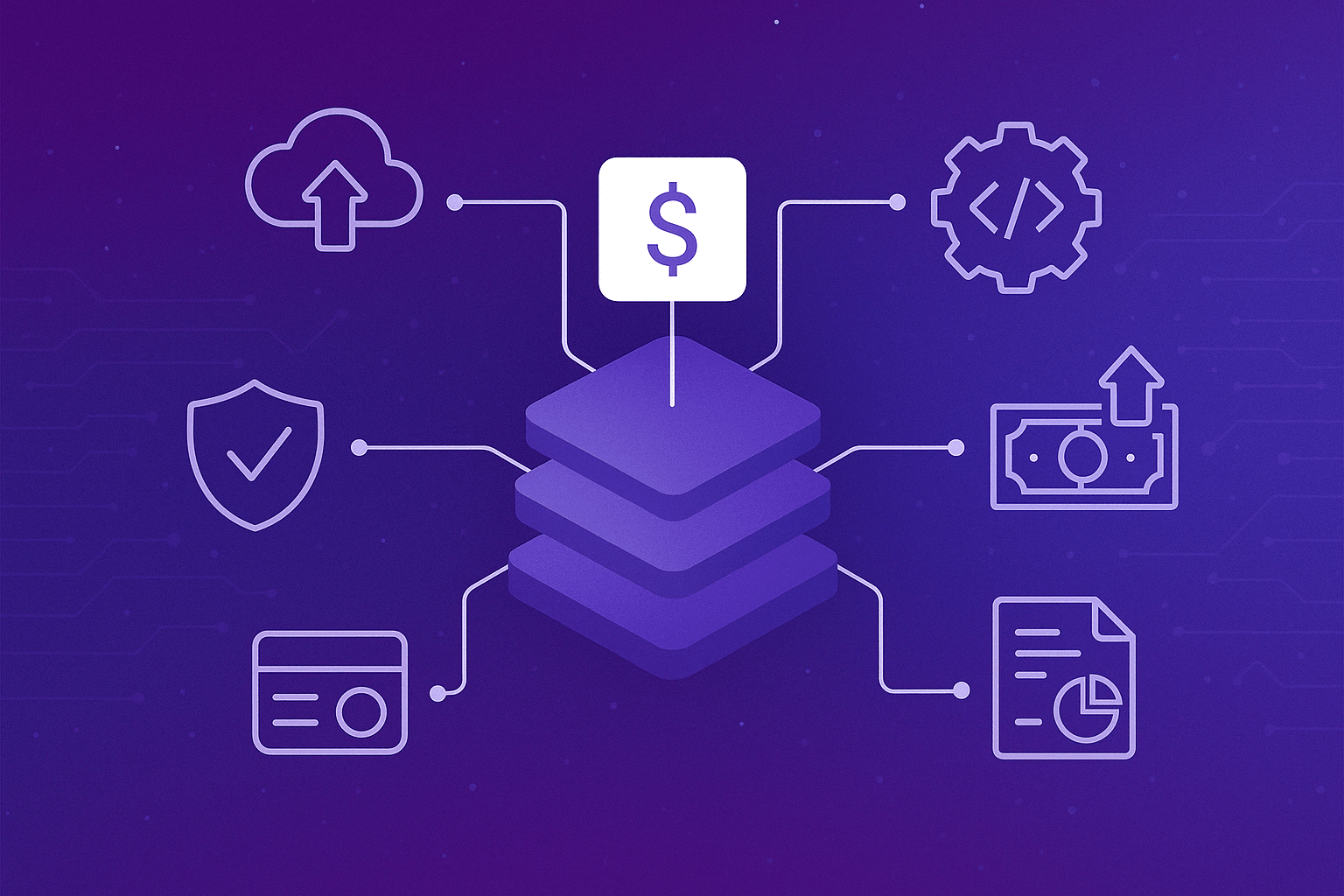
Choosing the best fintech tools is no longer a luxury, it is a competitive necessity. B2B founders, CFOs, and finance teams need systems that are scalable, interoperable, and built for a real-time digital economy. Whether you are launching new banking features, automating your cash management, simplifying cross-border payments, or staying ahead of compliance, the right combination of SaaS fintech software and finance APIs can become a major growth lever.
At Fintech Review, we will continue spotlighting the innovations reshaping how businesses manage money, risk, and opportunity. The future belongs to those who build intelligently and with the right tools.
If you are a fintech company, platform, or service provider and would like to be considered for inclusion in this list, or if you would like to suggest updates, please get in touch. We are always on the lookout for standout solutions driving the future of finance.