
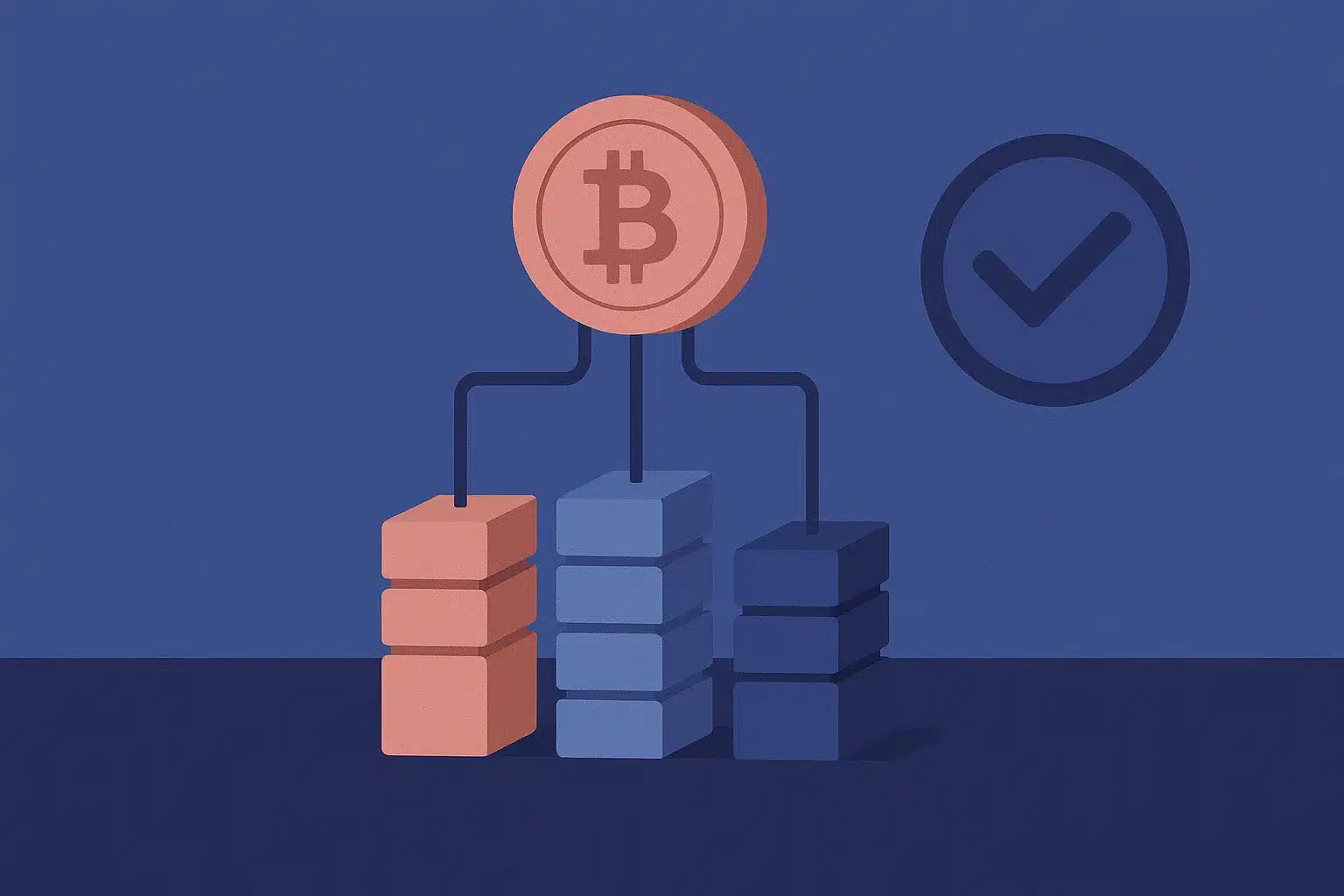
Staking has become one of the most popular ways for cryptocurrency holders to put their assets to work. It refers to the process of locking up digital tokens in a blockchain network that uses Proof-of-Stake (PoS) or a similar consensus mechanism, in order to support the operation of the network and earn rewards.
For many investors, staking offers a way to generate passive income. For blockchain networks, staking ensures security and decentralisation. Together, these dynamics make staking a central pillar of today’s crypto economy.
The Basics of Staking
Staking involves committing a cryptocurrency to a blockchain protocol in exchange for rewards. The staked assets are used by the network to validate transactions and create new blocks.
The concept originates from Proof-of-Stake, where the right to validate transactions is assigned based on the amount of cryptocurrency a participant has staked. Unlike Proof-of-Work (PoW), which relies on energy-intensive mining, staking aligns economic incentives with network security by requiring participants to lock their own assets as collateral.
When you stake, you typically earn a return in the form of additional tokens. This is often expressed as an annual percentage yield (APY).
How Staking Works

Staking can be broken down into a few key steps:
- Choosing a Blockchain: Only blockchains using PoS or variants (such as Delegated Proof-of-Stake) allow staking. Examples include Ethereum, Cardano, Solana, and Tezos.
- Becoming a Validator: To participate directly, you must run a validator node and deposit a minimum amount of tokens. For Ethereum, this is 32 ETH.
- Delegating to Validators: Many users stake through pools or exchanges, which aggregate tokens from many participants and handle the technical aspects.
- Block Validation: Validators are selected to propose and verify new blocks based on their stake.
- Earning Rewards: Validators and delegators receive rewards for honest participation. Misbehaviour, such as attempting to validate fraudulent transactions, can result in penalties or slashing (loss of some staked tokens).
This model ensures that validators act in the network’s best interest, since they risk their own funds if they act dishonestly.
How Staking Works
Stake
Users lock up tokens to participate in the network and qualify for rewards.
Validator
Staked tokens support validators who secure the blockchain and process transactions.
Block Validation
Validators propose and confirm new blocks, ensuring the network runs smoothly.
Rewards / Penalties
Honest participation earns staking rewards, while misbehaviour can lead to slashing.
Types of Staking
Different forms of staking have emerged as the market matured.
Native Staking
This refers to staking directly on a blockchain protocol, either by running your own validator or delegating tokens to one.
Staking Pools
Pools aggregate the tokens of many users, increasing the chance of being selected as validators. Participants share in the rewards. Pools make staking accessible to users without technical expertise or large capital.
Exchange-Based Staking
Centralised exchanges such as Coinbase, Binance, and Kraken offer staking services. Users simply opt in and receive rewards while the exchange handles validator operations.
Liquid Staking
Protocols such as Lido or Rocket Pool allow users to stake tokens but still receive a liquid derivative token in return. This token can be traded, lent, or used in DeFi, providing flexibility while the original tokens remain staked.
Benefits of Staking

Staking offers advantages to both investors and blockchain networks.
For Investors
- Passive Income: Earn yields often higher than traditional savings accounts.
- Long-Term Alignment: Encourages holding tokens, reducing speculative selling.
- Accessibility: With pools and exchanges, even small holders can participate.
For Networks
- Security: The more tokens staked, the harder it is for attackers to control the system.
- Decentralisation: Broad participation strengthens resilience.
- Efficiency: PoS networks use far less energy than PoW.
Risks of Staking
Staking is not without downsides. Key risks include:
- Slashing: Validators who behave dishonestly or fail to remain online may lose part of their stake.
- Lock-Up Periods: Some protocols require tokens to be locked for days or weeks, reducing liquidity.
- Price Volatility: Even if you earn rewards, the underlying token’s value may decline.
- Custodial Risk: Staking via exchanges or pools involves trusting a third party.
- Smart Contract Bugs: Liquid staking protocols may contain vulnerabilities.
Understanding these risks is crucial before committing funds.
Staking vs Mining
Staking and mining are both methods of securing blockchains, but they differ fundamentally.
| Feature | Mining (PoW) | Staking (PoS) |
|---|---|---|
| Resource required | Computing power, energy | Capital (tokens) |
| Hardware | Specialised rigs (ASICs) | Standard servers |
| Barrier to entry | High energy & hardware | Owning stake, pools |
| Environmental impact | Significant | Minimal |
| Rewards | Block subsidies, fees | Staking rewards, fees |
It replaces the need for costly mining equipment with a system based on economic commitment.
Yields

Staking returns vary widely by network and demand. Typical APYs range from 3–15 per cent, though higher rates can be found in newer or riskier protocols.
Factors influencing yields include:
- Number of tokens staked (higher staking participation can reduce yields).
- Inflation rate of the token supply.
- Transaction fee revenue shared with validators.
- Protocol design (e.g., Ethereum’s dynamic reward rate).
Staking and DeFi
Staking plays a central role in decentralised finance. Liquid staking tokens such as stETH (staked ETH) can be used in lending platforms, liquidity pools, or as collateral. This composability creates new layers of yield and risk.
Examples include:
- Lending staked tokens for additional interest.
- Providing liquidity with derivative tokens.
- Using staked assets in synthetic asset protocols.
DeFi has made staking more flexible, but also more complex.
Staking and Embedded Finance
Beyond DeFi, staking is entering embedded finance. Platforms can integrate staking services into apps or wallets, allowing users to earn rewards seamlessly. For example:
- Neobanks offering staking yields alongside savings.
- Wallets embedding staking directly into their interface.
- Platforms using staking derivatives to provide embedded rewards.
This integration shows how staking is becoming part of mainstream financial products.
Regulation

Staking sits in a grey area for regulators. In some jurisdictions, staking services offered by exchanges have faced scrutiny over whether they constitute securities. Key regulatory questions include:
- Are staking rewards taxable income?
- Do staking providers need financial licences?
- How should consumer protections apply?
Regulation is likely to shape the accessibility and growth of staking in the years ahead.
Evaluating a Staking Opportunity
Before staking, investors should consider:
- Protocol Reputation: Established networks like Ethereum are safer than small, untested ones.
- Validator Reliability: Look at uptime, track record, and fees.
- Liquidity Needs: Check lock-up periods and whether liquid staking is an option.
- Security Audits: For staking protocols, ensure the code is reviewed.
- Rewards vs Risks: Higher APYs often signal greater risk.
Due diligence is as important in staking as in any other investment.
The Future of Staking

Staking is poised to grow as PoS becomes the dominant consensus mechanism. Trends to watch include:
- Expansion of liquid staking protocols.
- Greater institutional participation.
- Integration into mainstream fintech apps.
- Enhanced staking derivatives enabling new financial products.
- Clearer regulation, which could encourage adoption.
As staking evolves, it will not only secure blockchains but also reshape how investors and consumers interact with digital assets.
Staking is more than a way to earn passive income. It is the foundation of how Proof-of-Stake blockchains achieve security and decentralisation. For investors, staking offers attractive yields but also comes with risks, from volatility to slashing. For networks, it ensures stability and efficiency.
From Ethereum to Solana, from liquid staking in DeFi to embedded staking in financial apps, staking has become central to the crypto economy. Understanding what staking is, how it works, and where it is heading is essential for anyone looking to participate in the digital finance revolution.